Preparing UK industry for the future at MACH 2026

4 Mins
Published in Comment & Opinion
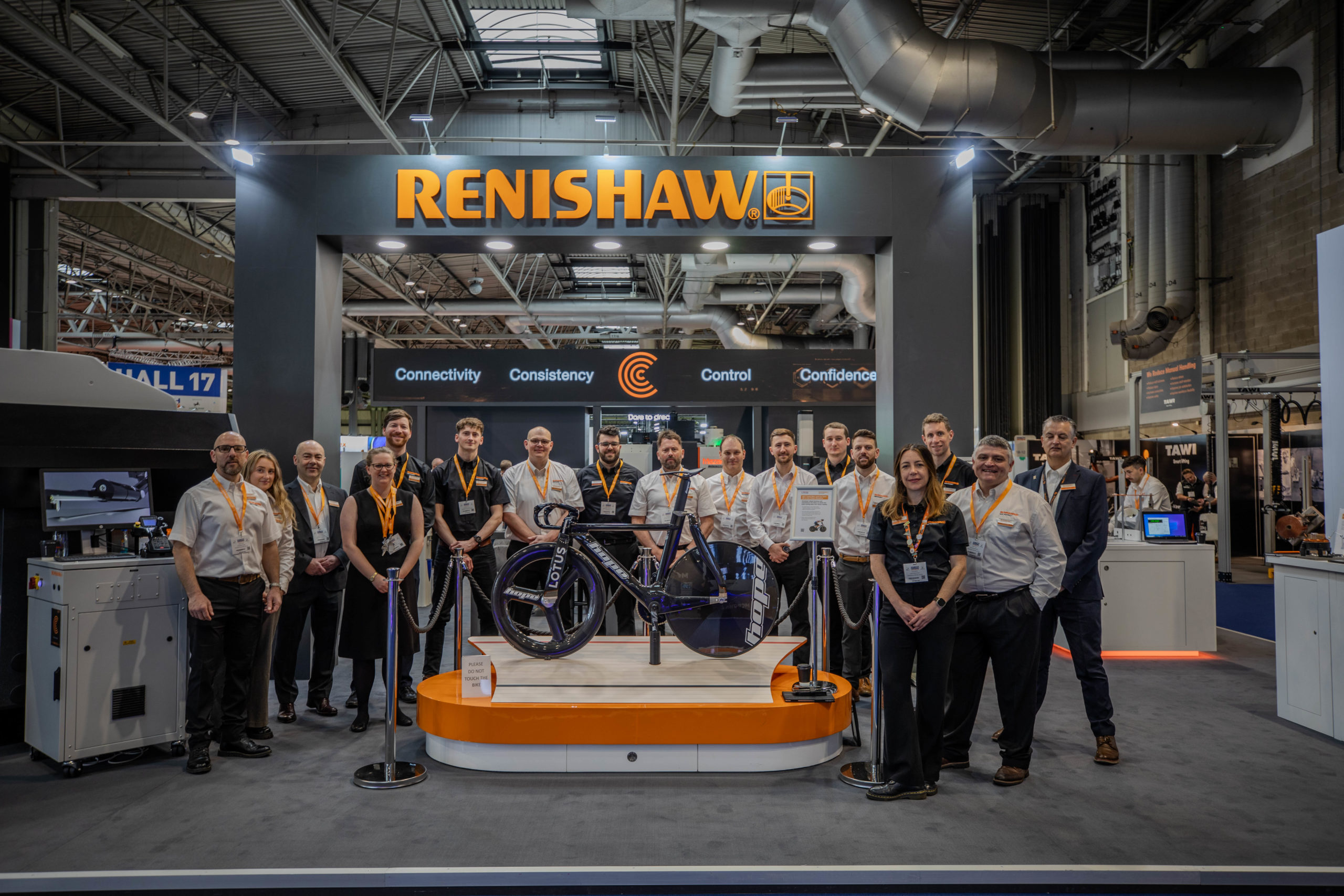
Rising costs, skills shortages and global uncertainty are forcing manufacturers to reassess how they operate. Manufacturing remains a critical part of the UK economy, contributing around £217 billion in gross value added and employing more than 2.6 million people, according to government figures. As the UK manufacturing sector gathers for MACH 2026 (NEC Birmingham, 20-24 April), the conversation across the industry is shifting. Michael Duffield, UK General Manager at Renishaw, explores how manufacturers are strengthening operational control, improving resilience and ensuring their operations are ready for future challenges and opportunities.
For many manufacturers, the key question is not whether opportunity exists, but whether their operations are structured to take advantage of it. With growing demand in sectors such as aerospace, automotive and high-precision engineering, firms must ensure their production systems are capable of scaling efficiently. This requires not only the right workforce and technology, but also integrated, data-driven decision-making and greater levels of process automation, so that opportunities can be converted into profitable, sustainable growth. Without these foundations, even promising market conditions may be difficult to capitalise on.
The labour shortage challenges
Skills remain one of the most pressing challenges, as 70% of advanced manufacturing firms had difficulty finding employees with the right skills in Europe last year. Developing the next generation of engineers takes time, and businesses must find ways to maintain productivity during this transition. Research also shows that 59% of UK manufacturers are planning to increase investment in skills development. Companies are increasingly recognising that workforce development, digital capability and operational efficiency must evolve together to support sustainable growth.
Apprenticeships are increasingly recognised as a key pathway for addressing the skills shortage while developing talent aligned with the needs of modern manufacturing. For manufacturers, apprenticeship programmes represent a long-term investment in building capability, ensuring that new engineers and technicians develop the hands-on skills required for increasingly complex and technology-driven production environments.
At the same time, the workforce itself is changing. Research shows that the proportion of manufacturing employees aged over 55 has risen significantly over the past two decades, accelerating the retirement of experienced workers and increasing the pressure on companies to develop new talent pipelines. This demographic shift means knowledge transfer and training are becoming critical priorities across the sector. Without effective succession planning and structured training programmes, manufacturers risk losing valuable operational expertise that has traditionally been built over decades.
Unlocking the power of automation
Improving productivity has become a central priority for the sector. A 2025 industry survey from PMMI found that 78% of manufacturers and suppliers ranked productivity as their top operational priority, reflecting growing pressure to improve efficiency and competitiveness. Against a backdrop of rising energy costs, supply chain volatility and global competition, manufacturers are increasingly focused on strengthening operational performance while maintaining quality and reliability.
Technology can play an important role here, enabling skilled workers to focus on higher-value tasks rather than routine processes. Automation is therefore becoming increasingly important. While the UK’s high-mix, low-volume manufacturing environment presents challenges, the productivity impact of low automation cannot be ignored. Introducing automation in the right areas can increase consistency, improve throughput and allow manufacturers to respond more effectively to changing demand.
Reflecting the importance of these technologies, the UK government has committed £2.8 billion in research and development investment to support advanced manufacturing, automation and digital technologies as part of its long-term industrial strategy. The aim is to strengthen domestic capability and ensure British industry remains competitive in an increasingly complex global manufacturing landscape. Public and private investment in advanced manufacturing technologies is thus playing a key role in supporting productivity growth and strengthening industrial resilience.
Industry analysis suggests that around 41% of European manufacturers have already implemented Industry 4.0 technologies at scale, demonstrating how digitalisation and automation are becoming central to modern manufacturing strategies. Adoption is particularly strong in sectors such as automotive (53%), electronics (48%) and aerospace (44%), where precision, efficiency and process control are critical.
Creating a data-driven environment
However, automation alone does not unlock its full potential without reliable insight into how production processes are performing. Many manufacturers still operate with limited visibility of what is happening on the shop floor in real time. Decisions about performance, machine utilisation and process stability are often based on historical data or manual reporting. In an environment where margins are tight, this lack of visibility can restrict improvement.
Digital manufacturing technologies are beginning to address this challenge by enabling manufacturers to capture and analyse production data as it happens. With real-time insight into processes, businesses can detect variation earlier, improve quality and make more informed operational decisions. When implemented effectively, these technologies provide greater control across the entire manufacturing operation. This capability turns every site into a living, data-driven system, where performance, reliability and sustainability can be measured continuously.
According to research by PwC, 91 % of industrial companies are investing in digital technologies, though only around 6 % consider themselves fully digitised, underscoring that visibility and real-time integration remain a work in progress. This shift towards data-driven manufacturing is enabling companies to move from reactive problem-solving to proactive performance optimisation.
This is why events such as MACH remain so important to the engineering community. The exhibition brings together manufacturers, technology providers and industry leaders to explore solutions to the challenges facing the sector. At Renishaw, we approach these discussions as both a technology provider and a manufacturer. Our industrial metrology, additive manufacturing and process control technologies are used across a wide range of industries, but they are also deployed extensively within our own production facilities.
The objective is not simply to introduce new tools, but to help manufacturers build operations that are more capable, predictable and efficient. That may involve improving measurement processes to identify variation earlier, introducing automation to increase throughput or connecting systems to enable better decision-making through production data.
Visitors to MACH 2026 are invited to explore how they can address technical challenges and wider strategic priorities on stand 420 in hall 19.
Want to know more about this article?
Ask us below...