Turning a UK problem into a global sliding-head tooling solution

6 Mins
Published in Tooling
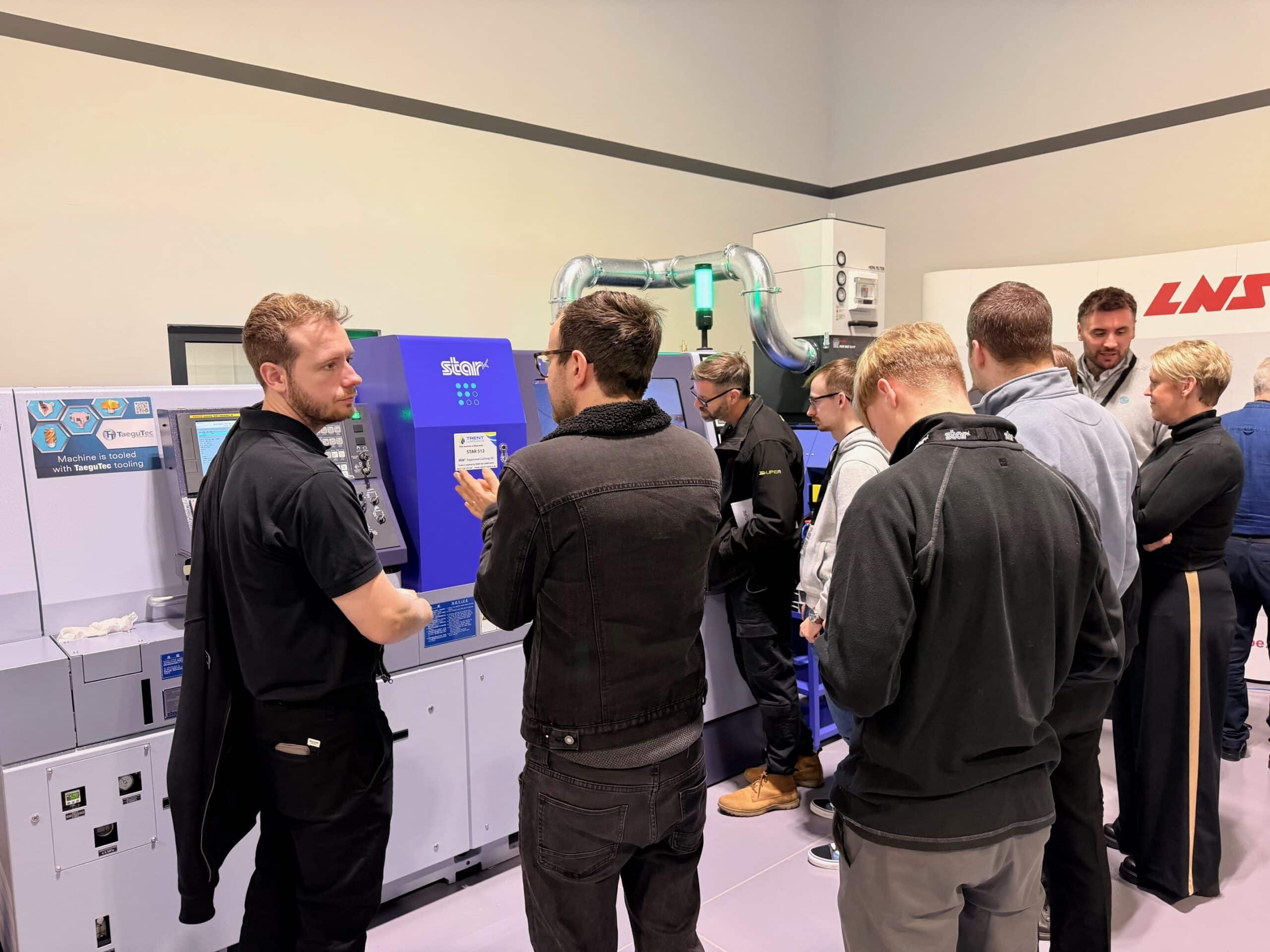
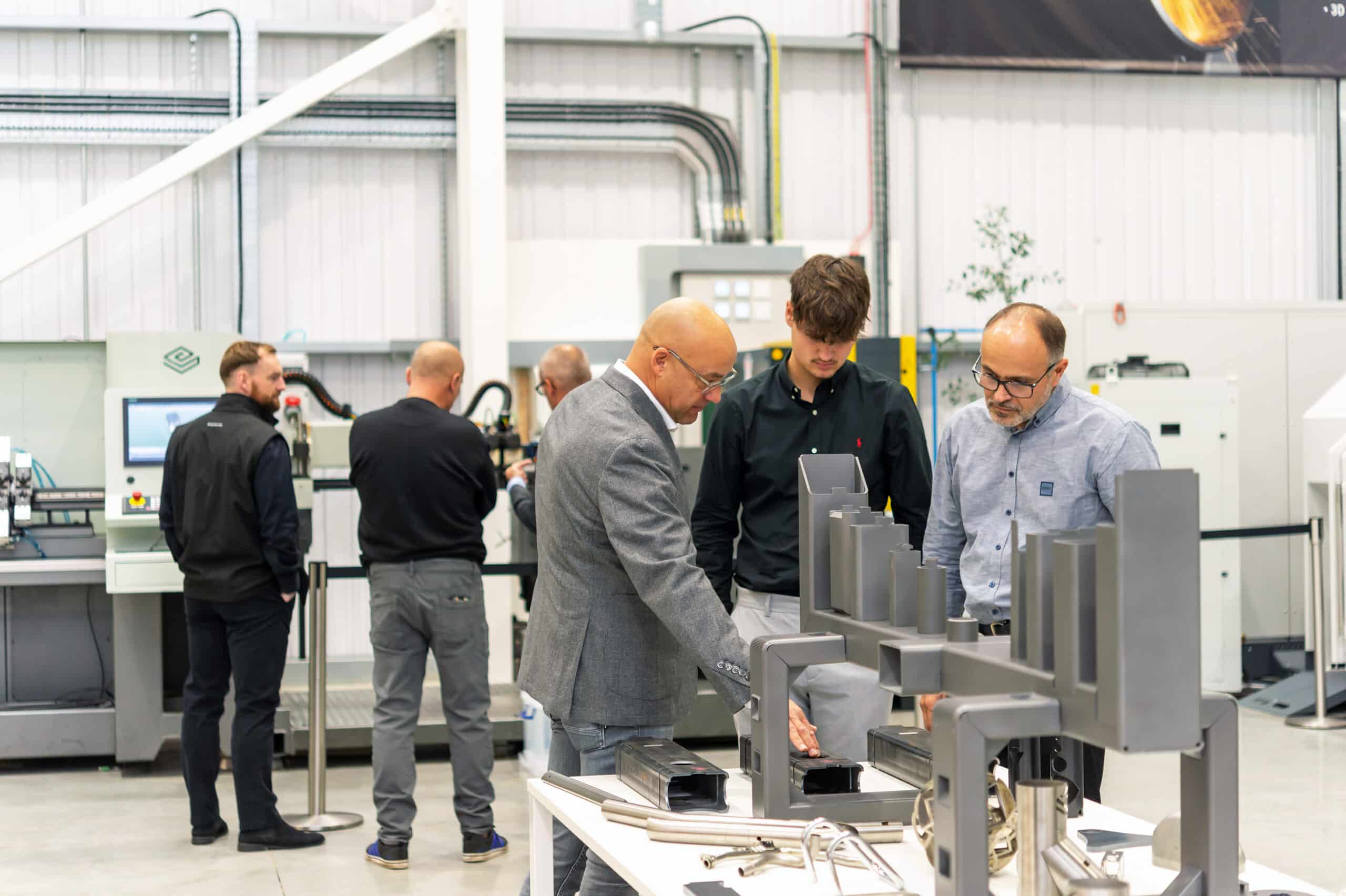
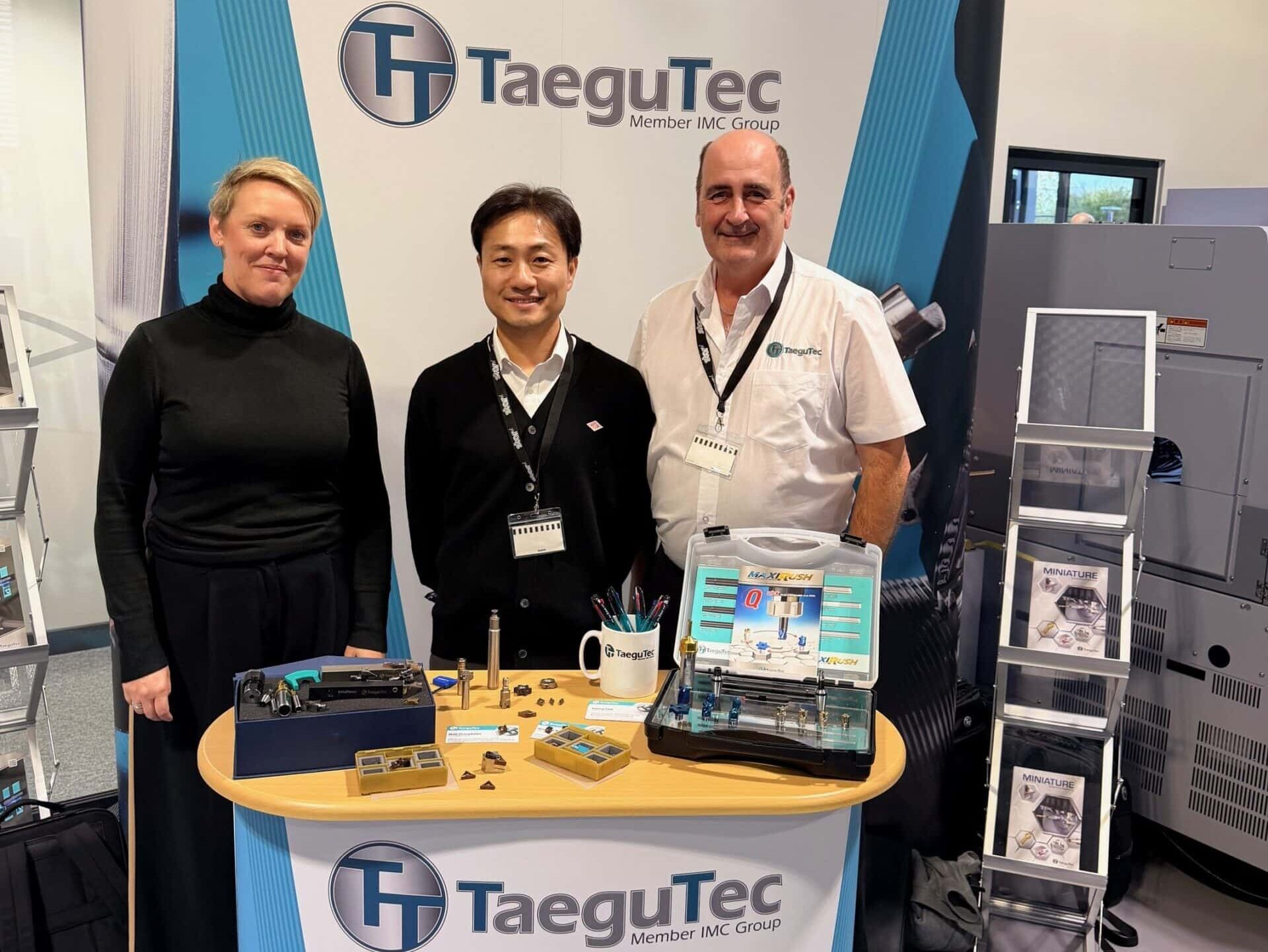
As the sliding-head turning product specialist at the headquarters of cutting tool specialist TaeguTec in South Korea, Jung Jae-Wook (Jess Jung), recently spent a week in Britain visiting customers with technical sales engineers from TaeguTec UK. The scheduled tour included a visit to the recent Star Micronics GB open house in Derby (pictured). The trip also put a new product line in the spotlight, one that began as a request from a UK customer and is now heading for a worldwide launch.
The visit gave Jess a close look at how the UK differs from the home market in Asia.
“I’m very impressed by the technology in the UK,” he said. “South Korea is very focused on mass production, but the UK is somewhat different. Customers have varied product lines and the work is more complicated, with five-axis and multi-spindle machines commonplace, and even multi-axis milling on sliding-head turning machines. In South Korea, we have higher volumes and more production parts, whereas the UK produces more high-value, complex parts that demand more complex machine tools.”
Jess added: “Customers do a lot of precision machining, and the trend changes very quickly, which is why the products are ever-changing. To accommodate this, we’ve prepared new turning products and parting-off tools that will be launched in 2027 to cover a wide range of cases. This will be especially relevant for the UK market.”
A problem at the back of the machine
The product at the centre of the story is TaeguTec’s WinSwiss line of head-change tooling for sliding-head turning operations. This tooling is now being extended from square shank to round shank. The idea came from a challenge presented to TaeguTec by a globally renowned hydraulics manufacturer on the south coast, which produces hydraulic spools and valves in reasonably high volumes on Miyano turning centres.
On the company’s Miyano BNE 51, the tool station is at the rear of the machine, making insert changes awkward because of the powerhouse machine’s large work envelope.
“The engineer outlined the problem and asked it we had a solution,” revealed Iain Lacayo, Senior Sales Engineer for TaeguTec UK. “It was as simple as changing the inserts. However, the screw was very difficult to access, as it’s right at the back of the machine and you can’t get in there easily.”
Jess saw the same issue on other machines.
“Some machines have a very niche tool position, while some customers use the opposite position. In this instance, we were challenged by a customer and there’s nothing we like more at TaeguTec than find solutions for customers.”
The project ran for around two years. Iain identified the problem on a first visit to the south coast customer and, through discussions and development work with Jess, a solution was developed. Some months later, Jess visited the UK with prototype tools.
“We went straight out to the machine, put it in and hit the button, and the customer was very happy,” reported Iain. “He ordered four different heads straight away; external turning and then grooving. The improvement is so dramatic that the customer immediately wanted to standardise on the new system.”
That order changed the plan, as Jess continued: “Before the visit to the UK, I just wanted to make the new tool as a special. After the visit with hydraulics manufacturer, we instantly won significant customer demand, so we prepared the line as standard.”
The technology behind the head change
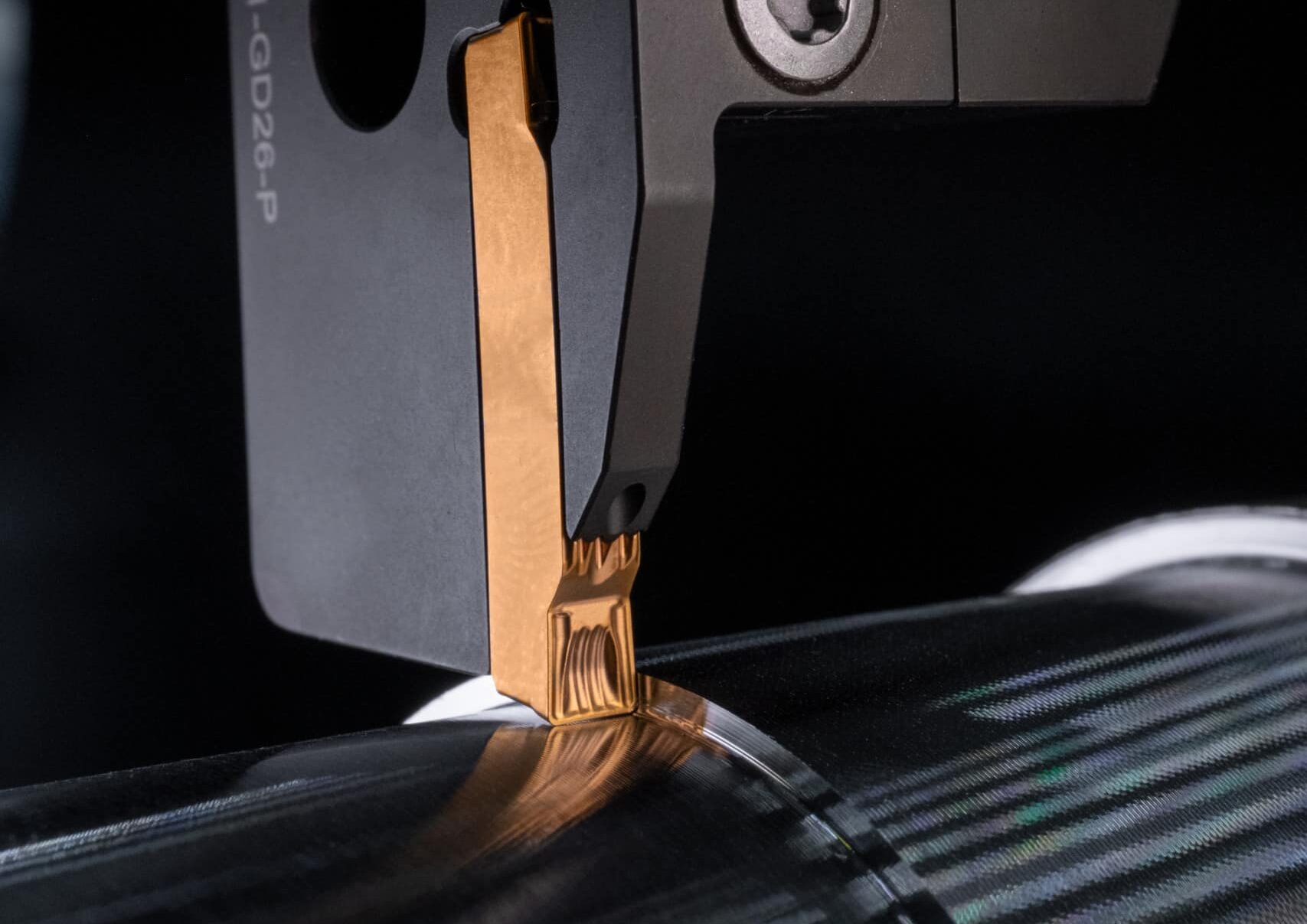
The round shank WinSwiss works on the same principle as the square version. The operator can remove the head, fit another and carry on without chasing a screw around the machine.
Iain explained the interface: “There’s a square that connects up to the centre point with a spigot, and then a flat like a whistle notch. When you put the screw in, it pulls the head back, which delivers exceptional positional accuracy, repeatability and stability. The square fitting keeps the orientation, so it’s at the correct centre height.”
Rigidity is the first concern for most customers, according to Jess, and the connection has been tested for it. “The connection is very rigid and very unique. We can guarantee repeatability of 10 microns.”
More than 10 different heads are already available, covering parting, external turning and threading, with back turning also available. Each solution uses standard inserts from the existing ranges. Through coolant is also catered for.
“Normally, on the back side of the machine you only have the sleeve area for through coolant,” commented Jess. “We have an inlet near the head, so it’s easy to connect to the manifold – and coolant is directed to the cutting edge to improve performance and swarf clearance.”
The 16 mm diameter shank launches in the new year, with the range extending from 19.05 to 25.4 mm for sliding-head machines that run on imperial tooling. There’s also a 22 mm option. In addition, a head and shank for 10 by 10 mm tool configurations is arriving soon to suit the smaller sliding head machines.
Productivity and availability
Ease of access is only part of the benefit. Skilled setters are hard to find, and a head change system reduces dependence on them.
“It’s difficult to find skilled people and new starters find machine set up a difficult task that takes too much time,” highlighted Jess. “Normally, an averagely skilled person needs around four to five minutes to change the insert and take off the holder. With our system, it takes only 30 seconds. When you save downtime and set-up time, you can increase productivity.”
Iain added that the system also helps while the machine is cutting: “If you have two heads, the operator can take one out, put the other head in and hit the button to start. And while it’s running, the operator can prepare the next head ready for the subsequent changeover.”
The round-shank range is currently semi-standard, with standard status expected in spring 2027. Dimensions and head options will also be presented at the start of 2027, with UK availability expected from March or April. Interest from other markets is already building.
“Whenever I visit customers and machine tool companies, I show them the samples and they’re keen to try our new product,” stated Jess.
Iain is clear about where it all began. “This new product line all stemmed from a UK customer visit. Our support for customers in the UK, and our internal communication and development globally, is what led to the development of what will soon be a globally available product.”
A wider sliding-head programme
WinSwiss is one strand of a broader sliding-head tooling evolution. The QuadRush back-turning programme is expanding, and the TopCut double-ended grooving was also launched recently. This has drawn positive feedback from the medical sector since its introduction. It’s suitable for machining at depths up to 12 mm with very small inserts, making it applicable to parts such as implants.
Carbide pricing is shaping much of the rest.
“Due to the APT [ammonium paratungstate] problems and the increase in the price of tungsten carbide, we’re moving from solid-carbide tools to small insert type tools that reduce the cost for customers,” declared Jess.
The TaeguTec internal grooving range starts at 6 mm diameter, and indexable milling inserts now cover everything from 8 to 30 mm diameters on sliding-head machines. Furthermore, these lines are fully ground to hold tolerance, improve performance and reduce cutting forces.
Iain set it out simply: “It’s all driven by the cost of carbide. With these innovative indexable tools, the only consumable is the carbide at the business end, rather than the whole unit.”
Taking steps to replace solid-carbide tools with indexable alternatives has presented a challenge of solving chip evacuation issues.
“We have a slope design on our inserts and toolholders to help chip evacuation for internal grooving,” emphasised Jess. “Rigidity and stability are also very important, so we have a multiple contact structure that’s very rigid compared with solid carbide.”
A triangular insert is also planned for next year with three edges, a 55° front angle and extra clearance at the back.
“It’s designed for sliding-head machines,” stated Iain. “You can see the investment in R&D. TaeguTec is focusing on sliding-head lathes and product development is very much aimed at users of these machines.”
Looking ahead To AI and robotics
Asked what’s driving demand in the markets visited around the world, Jess had a clear answer: “At the moment, the trend is the global AI datacentre industry. We get a lot of information from customers who are developing new solutions now, and we’re also starting this journey to support our customers.”
One notable application is cooling.
“AI draws a high volume of power, so there’s a lot of heat during the process, and datacentres are changing from air to liquid cooling. Each tray holds GPUs, CPUs and storage devices, and they need a lot of small liquid-cooling parts. The coolant distribution units also need very small liquid-cooling components, and it’s vital to keep the area around the semiconductor leak-free.”
Robotics is the second growth area.
“Robotics is another rapidly expanding area worldwide. Robots require many tiny gears, especially in the fingers and elbows. Sliding-head machines can produce a wide range of robotic components, such as small spur gears and, at TaeguTec, we have high-technology single-point gear machining systems. Korea predicts huge growth in robotics, with the potential in millions or even billions of parts.”
Want to know more about this article?
Ask us below...