Universal Robots and Inbolt make AI-powered 3D vision guidance easier to deploy and scale

3 Mins
Published in Automation & Robotics
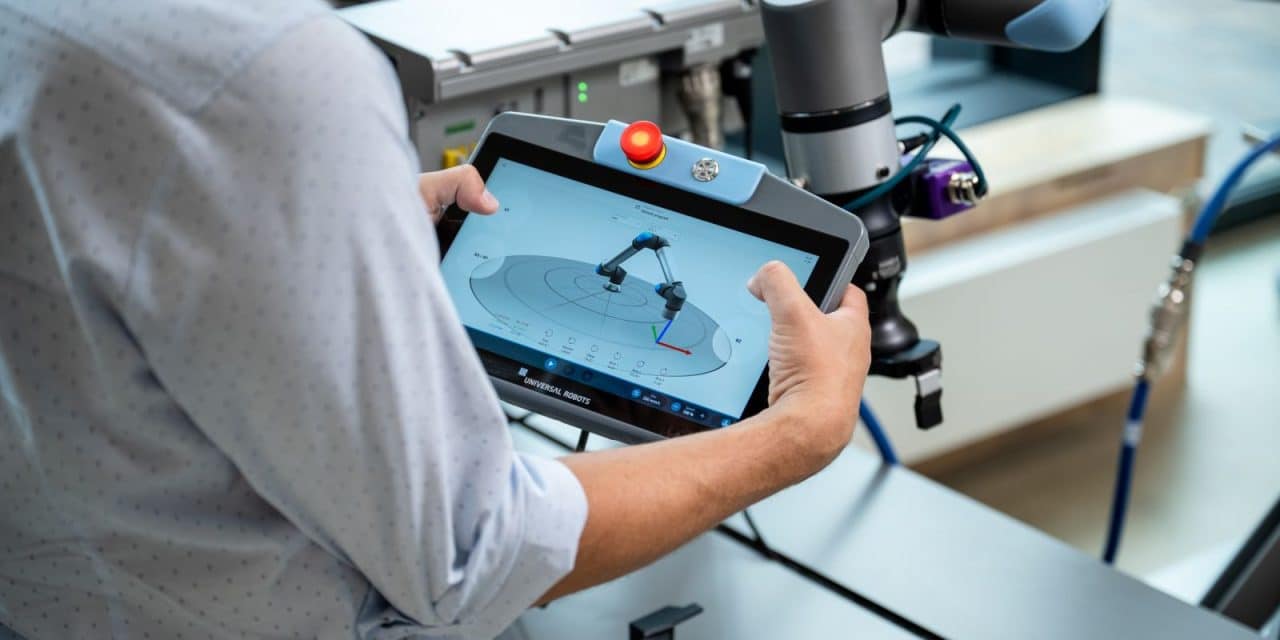
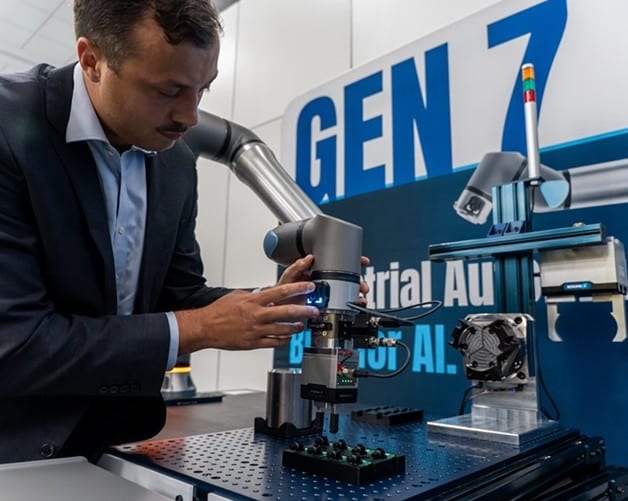
In a new development, Inbolt’s 3D AI vision guidance software is now natively integrated in Universal Robot’s Gen 7 robot platform. This new, 7th-generation robot family is now AI-ready out of the box. Inbolt is one of the first UR+ partners to run an AI application directly on the platform’s CB7 Core controller.
The Inbolt Standard licence lets a UR robot locate a part and adapt its taught path to the part’s actual position on every cycle, for tasks ranging from machine tending to de-palletising. A 3D camera on the robot’s wrist recognises the part from its CAD file, locates it, and adjusts the robot’s taught path to the part’s actual position on every cycle. It means manufacturers no longer need to build custom jigs and fixtures for every part and station, making the switch to a new product a software change rather than a tooling project.
Vision guidance without a second system
Now licensed to run natively on UR’s CB7 Core controller, Inbolt Standard removes the external industrial PC system that vision guidance until now has required; this capability simplifies installation, deployment and support of the system. And thanks to Gen 7’s new tool flange ethernet connectivity and power connectors, the Inbolt camera is directly connected to the robot at the tool flange so that cables are no longer routed along the outside of the arm.
“Gen 7 is our platform for physical AI, giving partners the compute, connectivity and tools to develop AI applications and deploy them directly on the robot,” reports Anders Billesø Beck, Vice President of AI Robotics Products at Universal Robots. “Inbolt Standard is a clear example of what that brings to the factory floor in terms of usability and reduced integration time. For manufacturers that standardise on UR across many sites, vision guidance is now a standard option for every new cell.”
Universal Robots and Inbolt have worked together since 2022, and vision-guided UR robot cells from the two companies already run in production at manufacturers in Europe and North America. One example is a Stellantis engine-tightening station, where Inbolt guidance reduced tightening failures by 91%, while requiring just 0.5 seconds of vision processing per engine.
From fixtures to software
Inbolt Standard covers stationary applications where parts arrive in a repeatable orientation, from single parts to layered racks and trays. In automotive, typical applications include machine tending and layered depalletising, as well as screwdriving, bolt run-down and de-racking.
“Inbolt and Universal Robots have deployed vision-guided cobots together for years, and with the new Gen 7, our products have never been closer,” states Rudy Cohen, co-founder and CEO of Inbolt. “As vision guidance now runs on the robot itself, a manufacturer rolling out cobots across dozens of stations and several plants can specify it on every cell from day one, instead of engineering a new fixture for every part. We’ll bring more of the Inbolt range to UR customers in the coming months.”
Repeatability is 0.5 to 0.7 mm on fixed parts, and the camera’s active infrared depth sensing works in bright, dim or dark conditions. Inbolt Standard runs natively on UR’s g-Series robots – UR10g-1750, UR17g-1300 and UR18g-950 – with PolyScope X 10.13 or later. It is also compatible with e-Series and UR Series robots with a CB7 controller. For these, the camera will connect via an external cable.
Want to know more about this article?
Ask us below...