Titanium 3D printing cuts part costs

2 Mins
Published in Additive Manufacturing
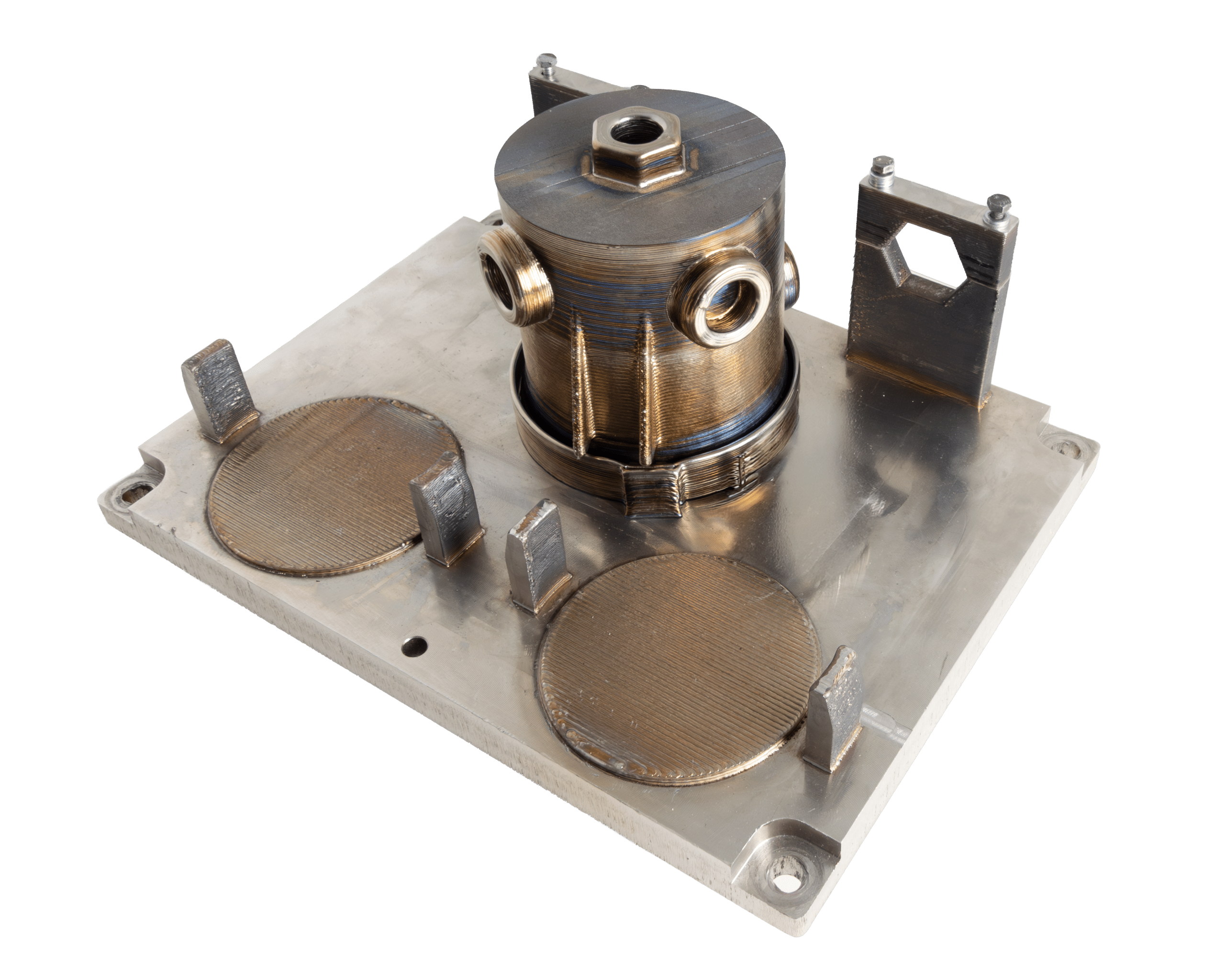
The ExxonMobil Baton Rouge refinery in Louisiana has transitioned from conventional subtractive manufacturing to Meltio’s laser metal deposition (LMD) technology for a critical component, which is now produced from titanium 64.
Titanium, in fact, was never a material that ExxonMobil considered for its manufacturing operations. However, thanks to Meltio’s technology, the company realised it wasn’t just a workable solution but a cost-effective one that wouldn’t compromise part quality or performance.
Taking up the challenge
A major challenge was adapting the heavy-duty component for additive manufacturing, a task that presented distinct metallurgical and operational hurdles, including: atmospheric requirements (titanium 64 requires a strictly inert environment to achieve optimal micro-structural properties); thermal constraints (titanium needs a minimum layer time of 7 minutes to avoid overheating); and deposition defects (initial trials revealed surface oxidation, material overbuilding and loss of laser focus).
Engineering teams leveraged the Meltio M600 system to execute a complete part redesign tailored for three-axis printing.
Equal to the task
To maximise the efficiency of chamber inertisation, engineers additively manufactured a custom fixture using SS-316Lsi deposited on an SS304 base plate. This tooling enabled the batch production of four components simultaneously, naturally increasing inter-layer dwell times and eliminating surface oxidation issues.
The main body was redesigned with a 75° overhang limit. To avoid complex support structures, the team implemented a non-planar printing approach. Using the M600 probing functions, the machine executed a Z-axis touch-off at the lowest substrate point, depositing features directly to the curved surface.
Material overgrowth was successfully mitigated by decreasing laser power and print speed in localised regions. To prevent workspace displacement during non-extrusion travel moves, robust mechanical clamping was added to both sides of the fixture, locking the components into their co-ordinate systems.
42% cost saving
An impressive 42% decrease in costs and 90% reduction in lead time was achieved by ExxonMobil after incorporating Meltio’s technology, validating LMD as a highly competitive manufacturing solution for the oil and gas sector.
“This successful project highlights something very significant: metal additive manufacturing is no longer a laboratory technology but a real industrial tool for critical sectors such as energy, petrochemicals and defence,” states José Luis Sánchez, Meltio’s Managing Director. “The ability to manufacture complex titanium components while reducing costs, lead times and logistical dependence is a complete game-changer.”
Want to know more about this article?
Ask us below...