Strategic honing decisions create value

2 Mins
Published in Comment & Opinion
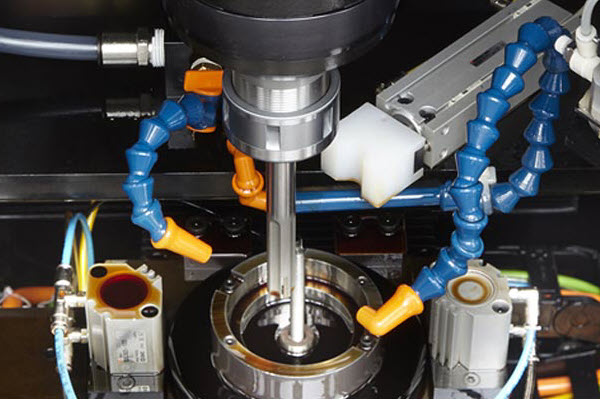
In manufacturing, honing rarely commands the same attention as milling, turning, grinding or robotics. Yet in many precision applications, it can significantly affect part performance, throughput, quality and cost. Here, Gunter Peersman, Global Distributor & Sales Manager for Europe at Sunnen Products Company, puts the case for honing technology.
Honing remains a specialised, niche process, yet is increasingly essential as industries demand tighter tolerances and better bore geometry, not to mention engineered surface finishes. In many applications, the bore is central to how the part performs, affecting sealing, lubrication, friction, reliability and service life.
As honing often occurs late in the manufacturing workflow, after the addition of significant value, inefficiencies and mistakes become expensive. It’s therefore best viewed as a precision-critical process requiring strategic planning from the outset.
Smart honing machines
Modern honing systems increasingly embed process knowledge into the machine. Automatic geometry correction, load sensing, tool overload protection, integrated gauging and stone wear compensation reduce operator intervention while improving consistency and throughput.
These capabilities improve labour utilisation and reduce interruptions. They also make it possible for one operator to support multiple machines or production steps. As a further benefit, more predictable cycle times support production planning and delivery performance.
Designing the full process
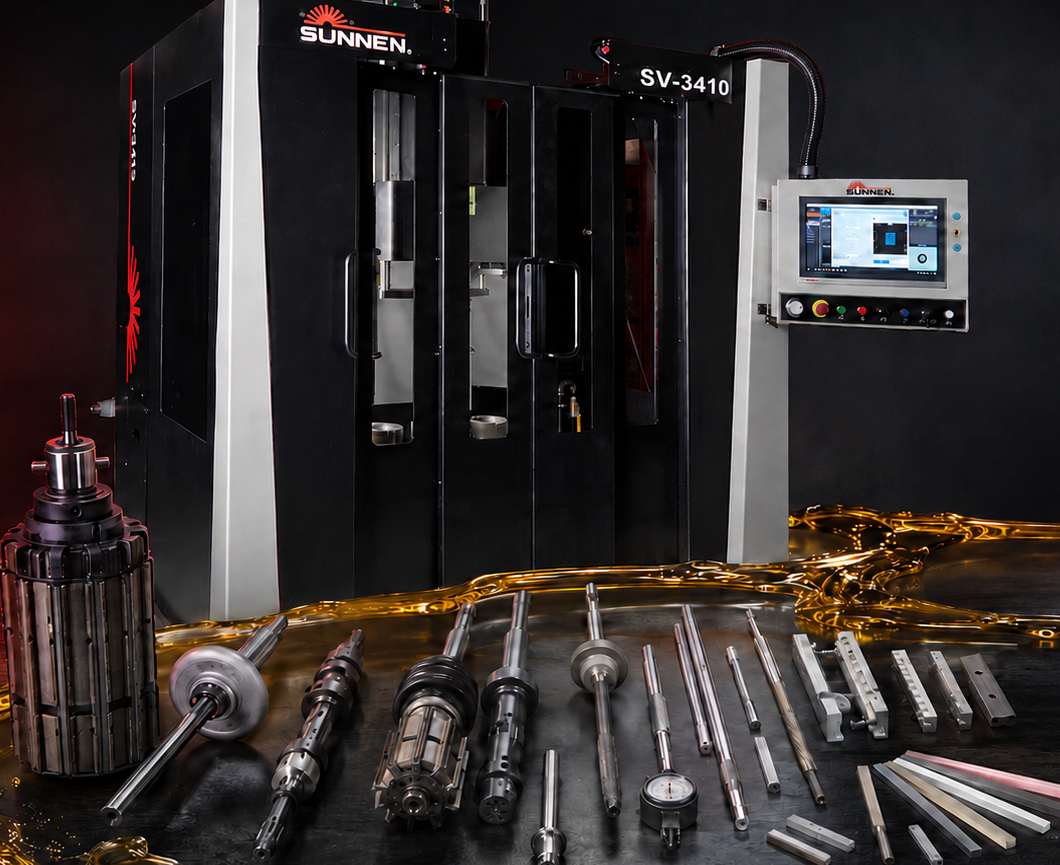
A holistic honing solution includes far more than the machine itself. Tooling, abrasives, fluids and gauging are core process components that also require careful consideration. Understanding key factors like annual volume, labour structure, upstream machining conditions, stock allowance and future growth helps ensure the selected machine delivers long-term operational value.
Upstream machining is particularly important. Excessive stock left by drilling or boring increases honing cycle times, abrasive wear, machine occupancy and labour costs. Optimising these earlier operations allows honing to focus on precision correction and surface refinement rather than unnecessary stock removal.
Sunnen works closely with customers to understand their production requirements and define expected return-on-investment, as well as select the right machine. A structured cost calculation considers production volume, operator costs, shift structure and growth potential. This integrated approach enables Sunnen to offer a guarantee of honing time and cost per part, based on a thorough understanding of the customer’s specific process before placing an order for the machine.
The ultimate value of honing lies not just in the machine, but in the process behind it. Modern automation creates the greatest benefits when combined with application expertise and upstream process understanding, alongside continuous refinement.
Want to know more about this article?
Ask us below...