Optimax: Looking beyond the surface

5 Mins
Published in Interviews & Opinion
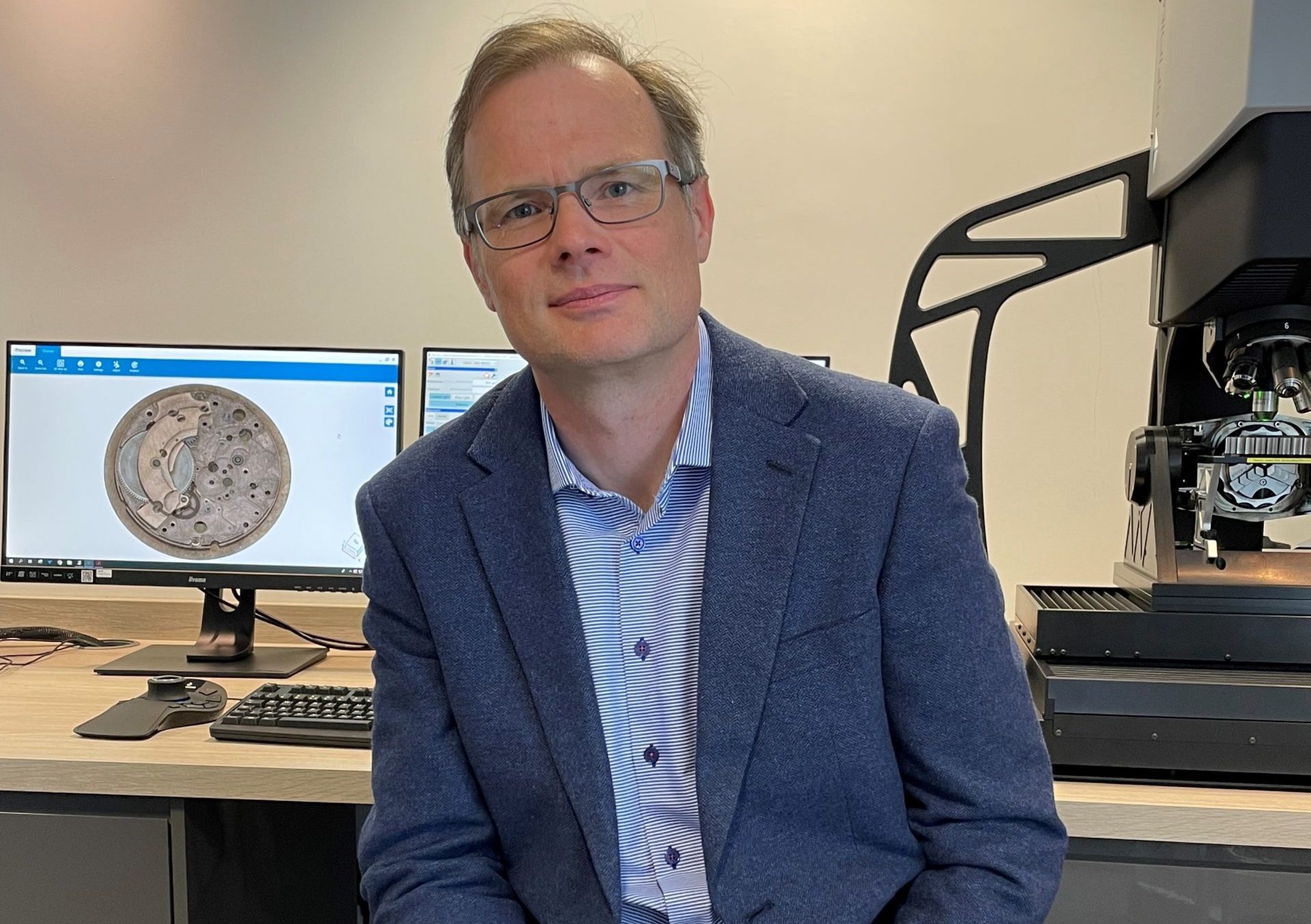
Machinery & Manufacturing sits down with Optimax to explore how a UKAS-accredited lab, a consultative mindset and a focus on optical metrology are tackling ever more complex measurement challenges.
There’s a moment in our conversation with Pete Clements, MD at Optimax Imaging Inspection & Measurement Ltd, where he describes a scenario that will feel uncomfortably familiar to some engineering companies: a shiny new piece of metrology equipment arrives on site, gets a few attempts at use for a few weeks…then quietly gathers dust.
“No one really knows how to use it properly,” he states. “It’s not their knowledge base. They’re brilliant at machining or moulding, but measurement uncertainty and metrology selection? That’s a different world.”
It’s a refreshingly honest starting point, and a clue to what makes Optimax tick. In fact, the more we talk, the sooner it becomes clear that the company’s UKAS-accredited laboratory and consultancy-led approach sit front and centre of this progressive, ambitious business.
More than a supplier
“We’re far from simply an importer or dealer,” confirms Pete. “Many customers come to us through the laboratory. That initial confidence often arrives from our UKAS accreditation and the sectors we serve, which include defence, aerospace, medical, automotive and motorsport. Anything that flies, rotates quickly, or requires ultra-precise fit.”
He continues: “Seeking advice frequently leads to a larger body of work. It might be more laboratory-based services, or it might prompt capital investment. But the key is that we remove the customer’s risk of choosing the wrong technology.”
It’s a point he returns to more than once. In a market packed with options, from tactile CMMs to optical systems and everything in between, making the wrong call can be an expensive mistake. Optimax’s answer is a structured, engineering-led process.
“We have 14 engineers in a team of 30, which is unusual. Most of them are UKAS-accredited operators. Customers come to us because they value that level of assurance.”
Inside the UKAS lab
If consultancy opens the door, the UKAS-accredited laboratory is what underpins everything. Operating to ISO 17025, the international standard for test and calibration laboratories, Optimax works within a tightly defined framework of methods, uncertainty budgets and traceability. Much of the company’s calibration work takes place at the customer’s site, not least because of the size and sensitivity of the equipment involved. But there’s another, more fundamental reason.
“Temperature is the biggest enemy of metrology. We want to assess the instrument in its working environment. The first thing we do is normalise the artefacts to the environment, so they’re aligned.”
From there, the process becomes methodical: equipment service; running linear, angular and non-linear checks; and feeding the resulting data through algorithms that present the results in a palatable format.
“If we find that something’s awry after recording our ‘as found’ results, we’ll correct the instrument via software or hardware and recalibrate. It’s a complete service.”
Optimax also has a temperature-controlled facility of its own, used for smaller equipment and the pre-dispatch calibration of new systems.
A niche within a niche
While many UKAS-accredited labs focus on more established areas of metrology, Optimax has deliberately taken a different path, as Pete reveals: “We cover all types of inspection and measurement, but we specialise in optical. It’s a smaller, more complex market. There’s probably only 5 or 10 UKAS labs in the UK operating in this space.”
That specialism shows up in everything from the company’s nanometre-level artefacts to its accreditation schedule, which includes optical-specific standards such as ISO 10360-7 for CMMs with imaging probes.
“In some cases, we’ve helped develop the schedules, typically where technologies are yet to receive recognised standards, or developed methods aligning to existing schedules. We were the first in the UK to gain accreditation to ISO 10360-7, and more recently optical shaft measurement, for which no specific standard currently exists. That’s about adding value, not just following the easy route. It also reflects a broader shift in manufacturing. Optical sensors are faster, they generate far more data, and the resolution is higher. Adding traceability to this technology, where none exists, is very rewarding”
From product to solution
Despite the strong laboratory focus, around two-thirds of Optimax’s revenue comes from product sales. But even here, the structure is telling. At one end sits straightforward, transactional business for products like bench microscopes or hand tools. In the middle, more established technologies like vision systems or profile projectors, where some technical input is required. And then there’s the fast-growing solutions-based channel.
“This is where the customer simply doesn’t have the knowledge to make a selection decision upfront,” comments Pete. “Our applications engineers get involved to assess the component, compare technologies and often run trials, perhaps measuring 100 parts as a proof of concept.”
The example he gives is a good one: measuring a microscopic bore inside a diesel injector. “Traditionally, you’d have to section and polish the part. Instead, we can look down a 100-micron diameter hole optically, reconstruct the geometry and understand its form. But it’s not just the machine, it’s the fixturing, the lighting, the software. It becomes a project.”
That project-based approach can extend to in-house CAD design, 3D printing, machining and even subcontract measurement before final system specification.
Future trajectory
As our conversation turns to wider trends, three themes quickly emerge. First, AI.
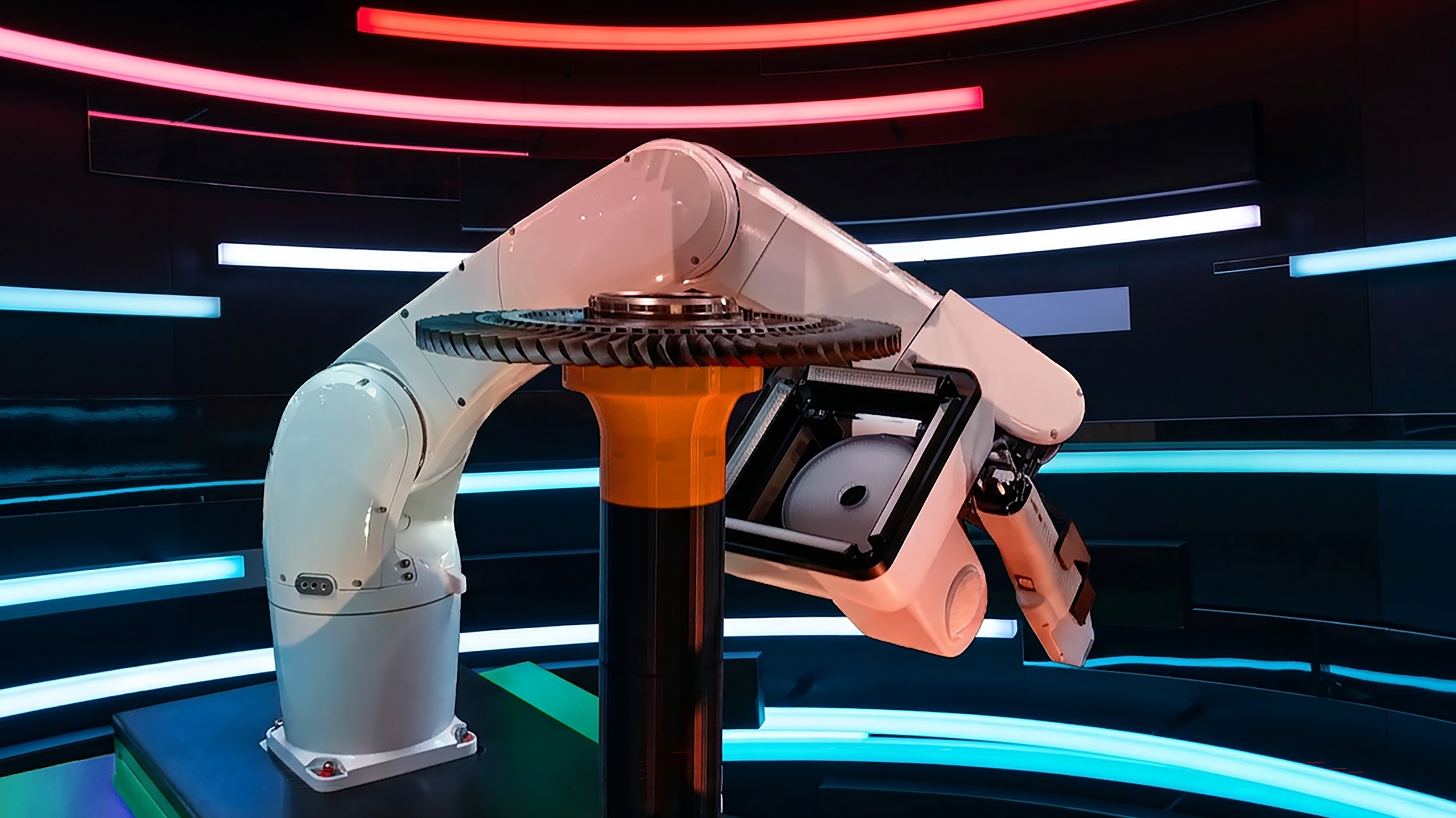
“We’re seeing real traction, particularly in aerospace,” says Pete. “Complex parts like turbine blades are still often inspected manually. AI allows us to automate that, identify defects and measure them. It’s far less subjective than a human operator.”
Second, the transfer of metrology to the shop floor: “For years, measurement sat in a lab somewhere, disconnected from production. Now, there’s a push to bring it into the process, feed data back in real time and prevent scrap before it happens.”
And third, the continued move from tactile to optical: “The cost of optical metrology is coming down, while speed and data density are going up and, crucially, the robustness of the data has improved massively. Historically, optical systems struggled with reflective surface finishes. That’s now changing.”
Built on support
For all the talk of technology, though, the final message from Optimax is a more human one.
“We started as a calibration and support business 25 years ago,” concludes Pete. “That’s our DNA. The relationship doesn’t end when the system is delivered, it starts there.”
It’s a simple idea, but one that feels increasingly relevant as manufacturing pushes towards ever tighter tolerances and more complex geometries. After all, buying metrology equipment is one thing. Knowing how to use and calibrate it properly, confidently and with traceable accuracy, is something else entirely.
Want to know more about this article?
Ask us below...