High-density component fixturing maximises output from flexible manufacturing cells

3 Mins
Published in Workholding Technology
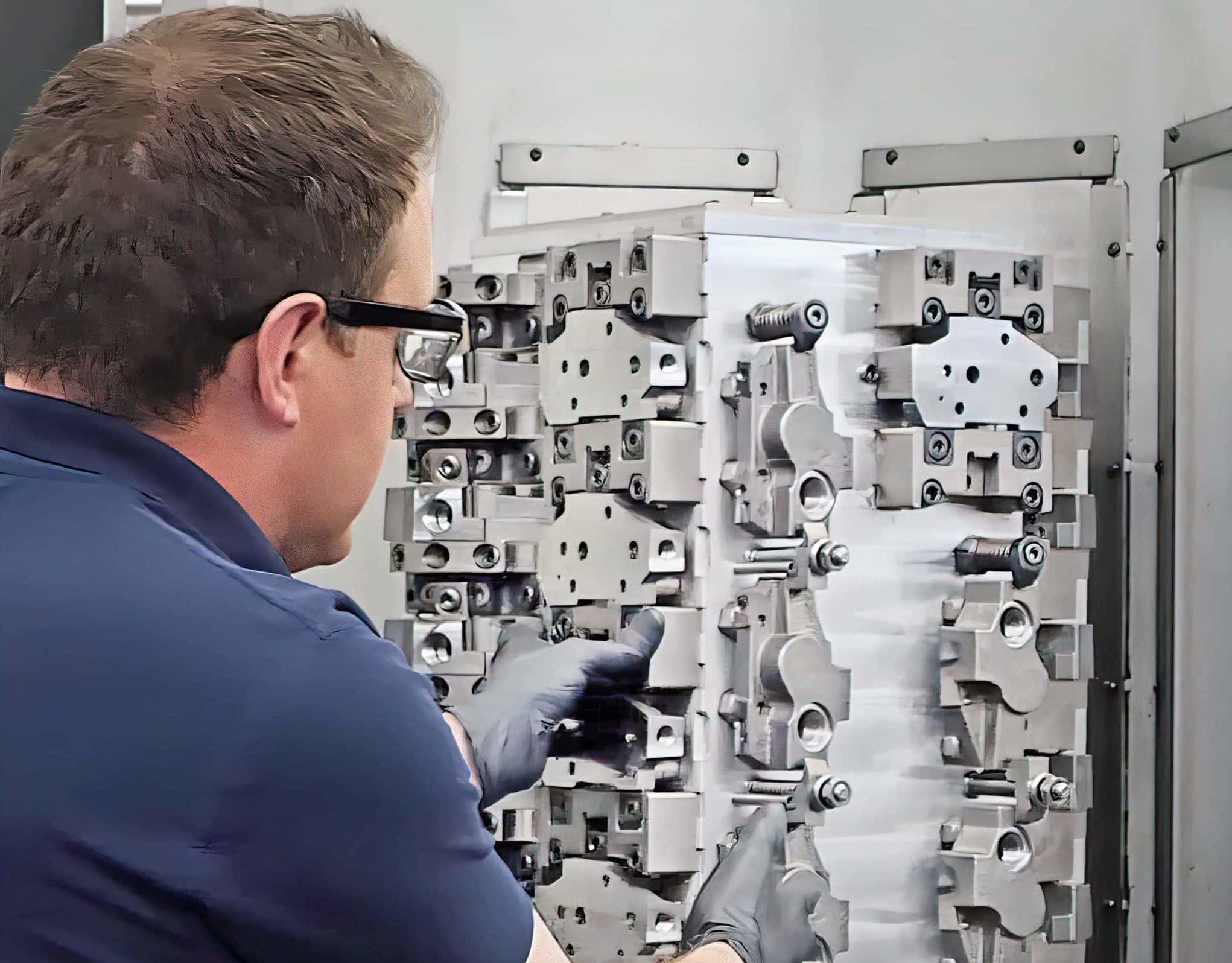
Hydraulic Projects (Hy-Pro), a Dawlish-based manufacturer of hydraulic control valves, pumps and marine steering systems, has expanded its production capacity significantly over the past decade. Employing 40 staff and serving a global customer base, the company produces 85% of its components in-house from aluminium billets and iron castings. To raise even further the efficiency of its machine shop – and help feed assembly lines with an increasing number of components during a recent upturn in business – Hy-Pro turned again to workholding specialist 1st Machine Tool Accessories (1st MTA).
The clamping equipment supplier initially delivered a US-made Chick Multi-LOK tooling column in 2016 for use on an Okuma horizontal machining centre featuring a 218-tool magazine and a 10-pallet pool. 1st MTA has supported the manufacturer’s growth ever since, in particular following the installation in March 2021 of a second, nearly identical Okuma flexible manufacturing cell. As a consequence, there are now six Chick Multi-LOKs in use across the factory.
These tooling columns enable dozens or even hundreds of parts to be set up in each Okuma cell to enable machining 24 hours a day, six days a week, including lights-out overnight. In both cells, workpiece set up takes place offline at a load/unload station in the pallet pool guarding. As a result, the spindle waits only for as long as it takes to deliver a pallet to the machine and rotate it into the working area.
Paul Vicarage, Quality Engineering Manager at Hy-Pro, highlights the impact of this: “We’re getting about six 24-hour days’ worth of machining for about four and a half days of single-shift operator input. Moreover, we benefit from high spindle uptime and considerable operational flexibility.”
To maintain secure workholding across various component types, Hy-Pro stores on-site about 20 compact, multi-part fixtures for attaching to the four sides of its tooling columns. Each fixture has a set of soft jaws machined in-house, or other workholding equipment, to suit the components that require machining. It’s possible to swap any fixture over in just six minutes. The adaptable arrangement eliminates the need to exchange an entire workholding system when switching components and workpiece materials, offering a more versatile alternative to bespoke, dedicated fixturing.
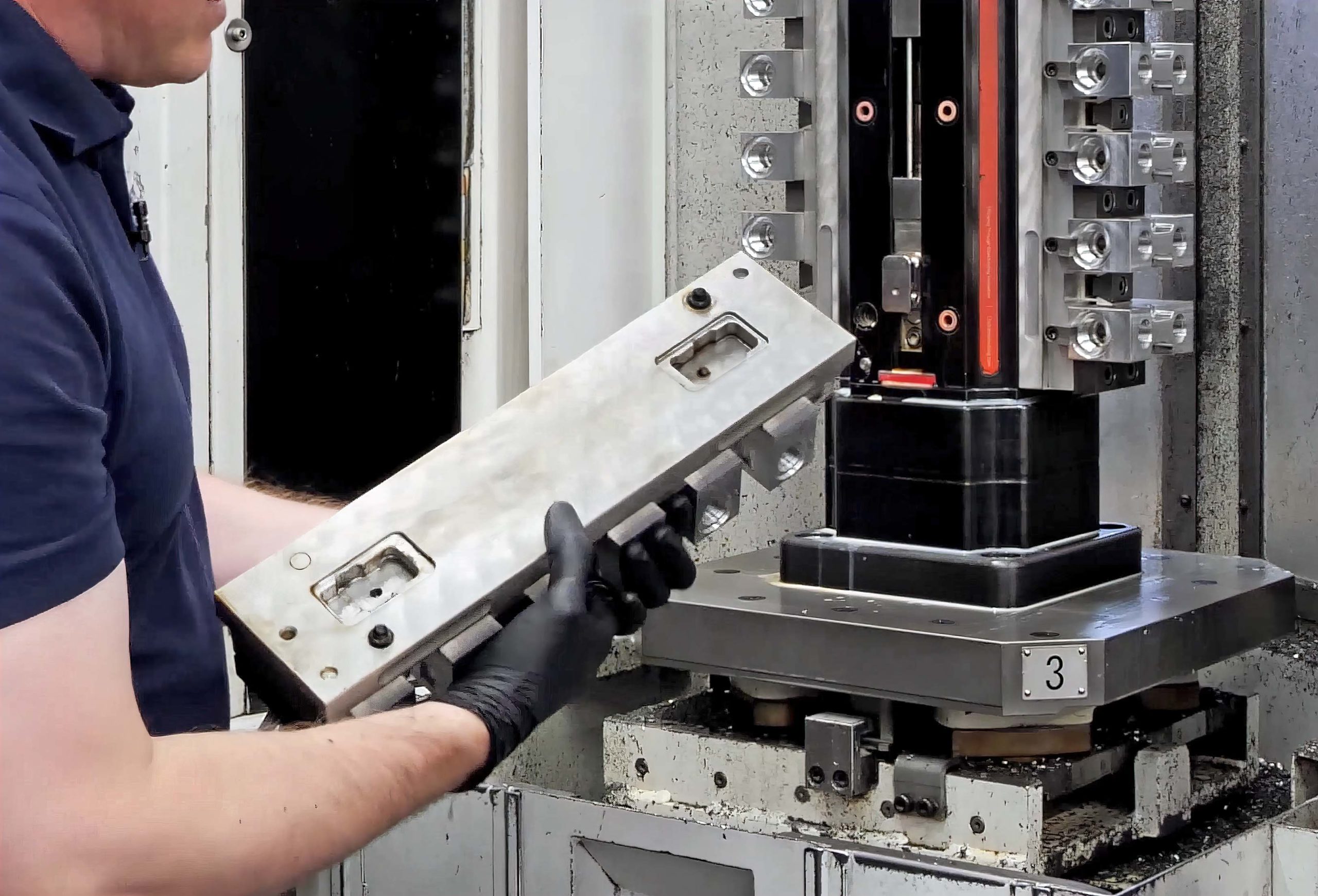
High-density workholding maximises weekly throughput in each Okuma FMS to match assembly demands. In one instance involving an optimal run of 150 aluminium parts per week, 15 at a time are fixtured on each of four sides of a hollow, high-strength, Tenzaloy cast aluminium alloy tooling column. The column was manufactured by Abbott in the US and supplied by 1st MTA.
The lightweight yet strong and vibration-damping column prevents exceeding the maximum pallet weight, while allowing Op 1 and Op 2 to run in just over 1 hour 10 minutes. It means 30 parts to come off completely machined each time.
The set up incorporates Finnish OK-Vise workholding, as well as US-made Mitee-Bite Pitbull clamps for Op 1. There are two of the tool-steel knife edges in a top rail and another in a bottom support rail, all three of which grip securely on the edges of the workpiece. For Op 2, Mitee-Bite Uniforce clamps secure the components. They expand in two directions to hold a pair of components simultaneously against fixed rails, leaving no witness marks on the finished component.
Paul says that 1st MTA’s Abbott system has provided five years of daily service without requiring any replacement parts. He also emphasises the accuracy: “Due to the excellent workholding rigidity, gear pockets are machined to within a few microns and this is maintained over the entire face of each side of the tooling column, with no variation.”
For heavy cuts on 250-grade cast-iron workpieces, a three-operation set up employs an Abbott column equipped with hardened fixtures, as well as low-profile Pitbull knife-edge clamps to avoid tool interference. Despite taking heavy cuts, the rigid clamping comfortably handles aggressive 4 mm depths of cut and 11.5 mm diameter drilling into solid material without pull-outs or stability issues.
“The comprehensive variety of workholding solutions supplied by 1st MTA means that we have complete control over manufacturing efficiency, flexibility and precision,” concludes Paul. “In addition, the longevity of the clamping equipment means that it’s very cost effective. As we move increasingly from stand-alone production platforms to pallet-based systems, we’ll continue to benefit from the multiplicity of clamping arrangements that are available from 1st MTA with a view to maximising multi-component fixturing and unattended running.”
Want to know more about this article?
Ask us below...