From virtual to value
Virtual technologies were once viewed as the preserve of major aerospace companies and multinational OEMs with deep engineering resources. Today, that perception is changing rapidly. As manufacturers of every size face mounting pressure to improve productivity and reduce costs, solutions such as the digital twin are fast-becoming increasingly practical tools for everyday machining.
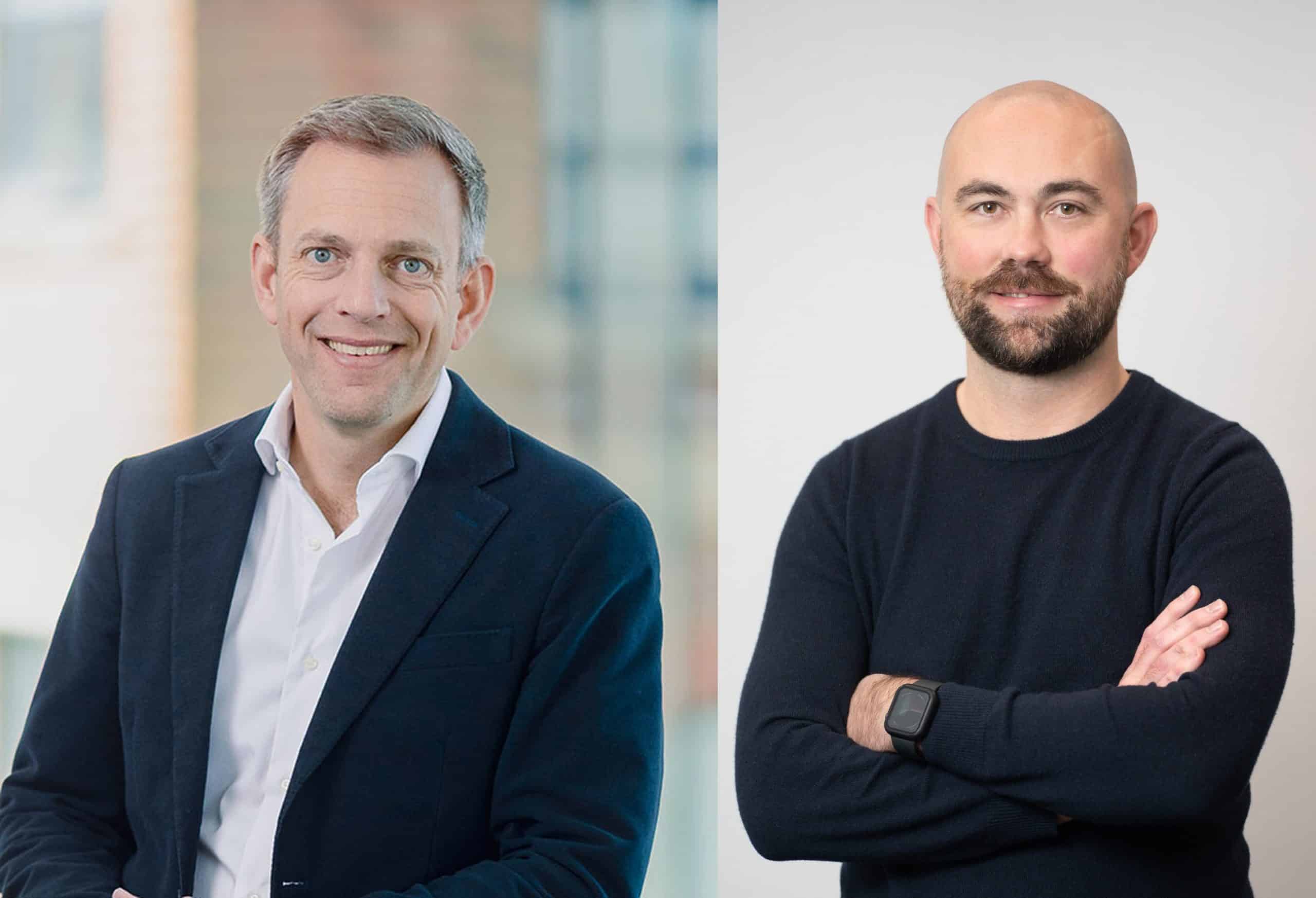
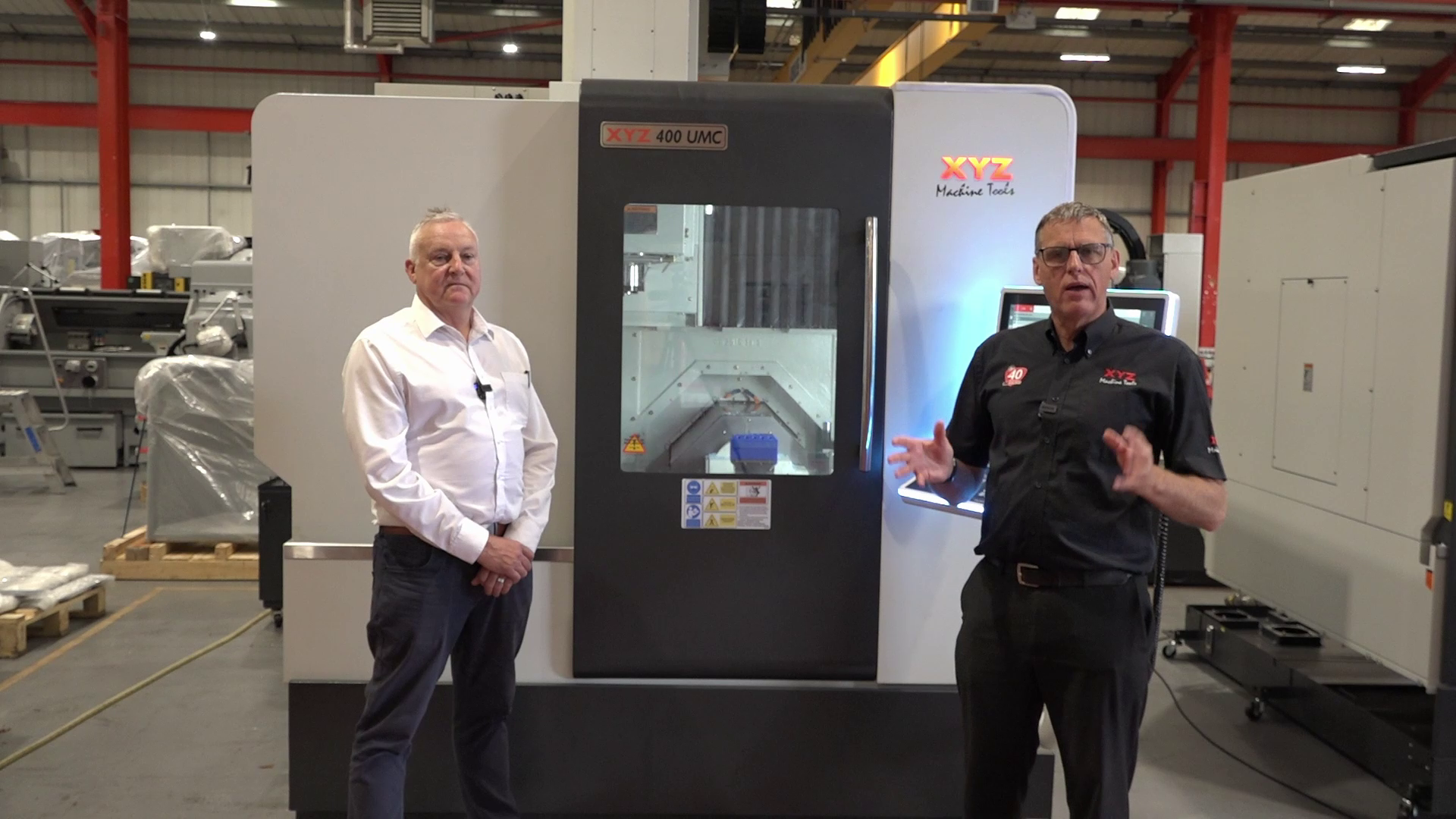
According to Mark Coombes (pictured, left), Head of Machine Tool Systems at Siemens UK & Ireland, the realities of modern manufacturing rather than software advances alone are driving the shift: “Modern machine shops encounter more complex components, shorter lead times, increasing quality demands and continuing cost pressures. Everyone’s looking for ways to become more efficient and competitive. Digital-twin technology can bring real value.”
Those pressures are equally familiar to XYZ Machine Tools. With the company currently introducing Siemens’ Run MyVirtual Machine digital-twin software into its own showroom, XYZ Product Marketing Specialist Mike Corbett (pictured, right) believes the industry has reached an important tipping point: “Not so many years ago, most workshops simply didn’t have the computing power to run complete virtual machine models. But now you can accurately replicate exact machine motion before you even press start.”
For Mike, digital-twin appeal extends well beyond preventing collisions: “One thing that really struck me was the energy aspect. Proving a program virtually requires nowhere near the electricity consumption of running the actual machine. At a time when energy has become such a significant business cost, it’s a major advantage.”
Virtual machining becomes practical
“Today, digital twin technology is not just for high-end CNC platforms but now also for the mid-range CNC platforms used by subcontractors and SMEs,” comments Mark. “Whether you’re using CAD/CAM or conversational programming, you’re able to optimise machining in a virtual environment without occupying the actual machine.”
Mike sees clear parallels with earlier technology shifts: “When I joined XYZ, many smaller companies didn’t have CAD/CAM. Adoption accelerated because the benefits became increasingly obvious. Digital twins are following the same path.”
The commercial argument is equally persuasive.
“If you’ve generated a program, why spend two or three hours proving it on the machine when it could be producing parts instead? Today’s machine shops simply can’t afford that level of downtime.”
Protecting valuable assets
As machine tools become increasingly sophisticated, they also become increasingly valuable investments. Five-axis machining centres and turn-mill machines offer remarkable flexibility, but they also introduce greater programming complexity. A single collision can result in costly machine repairs, damaged tooling, lost production and delayed deliveries.
For Mike, protecting those investments is becoming every bit as important as improving productivity: “We’ve seen machine tools evolve enormously over the past 20-30 years, and naturally those investments need safeguarding. Yes, there is of course a cost to implementing a digital twin but compared with the cost of a machine crash or broken tooling, it’s almost insignificant.”
Mark adds another often-overlooked advantage: “If you’re quoting for new work, you can program the component virtually and generate highly accurate cycle times. You’ll never lose on a job because of guesswork.”
Addressing the skills challenge
Perhaps one of the most significant long-term benefits lies in workforce development. Across UK manufacturing, experienced programmer-setters remain in short supply. Attracting young talent is equally challenging.
Mark believes the digital twin can help remodel perceptions: “Digital twins create a far more engaging environment for new recruits. You’re introducing people to advanced simulation software rather than simply asking them to stand next to a machine. It has real appeal.”
Mike has witnessed a similar evolution within customer workshops: “The old model of one operator looking after one machine has largely disappeared. Today we typically see one or two skilled personnel responsible for multiple machines. Those people are incredibly valuable to the business. Technologies like digital twin help keep those jobs interesting while giving less experienced operators a safe environment in which to develop their skills.”
For XYZ Machine Tools, digital-twin technology is valuable not only for end users, but also as a way of demonstrating machine capability before delivery. Working alongside Siemens, the company has recently developed a digital twin of its latest XYZ UMC 400 five-axis machining centre, allowing customers to experience the machine in a virtual environment.
“As a company ethos, we’ve always tried to make genuinely beneficial technology accessible to the majority of UK machine shops,” states Mike. “That’s what we did that with our ProtoTRAK control and later with SINUMERIK controls from Siemens and their conversational ShopMill and ShopTurn programming interfaces. Digital twin is the natural next step.”
Building confidence before production begins
The ability to validate the complete machining process digitally before the first part is produced is one of the most valuable benefits of the CNC digital twin. Increasingly, tooling suppliers provide digital models of cutters, toolholders and workholding, allowing digital-twin users to recreate an entire machining set up with remarkable accuracy.
“You can load a fixture on to the virtual machine, add the tooling and check everything incredibly quickly,” comments Mike. “If we can help customers reduce the risk of accidents while proving cycle times before production, we’re enabling them to move forward.”
Unlocking additional productivity on the machine
Once machining begins, another opportunity emerges. Real-time machining optimisation solutions like Siemens’ Adaptive Control & Monitoring Suite (ACM Suite) increases productivity in the machining process. The software continuously monitors spindle load and adjusts machining parameters in real time without needing to change the NC program.
“The process becomes adaptive, allowing you to make much better decisions about feed rates, tool life and process stability,” notes Mark. “You can shorten cycle times while protecting tooling and lowering energy consumption.”
From XYZ’s experience, the results are encouraging.
“We’re typically seeing cycle-time reductions of around 15-20% across a wide range of applications.”
XYZ is now preparing a three-month proof-of-concept trial with the first UK customer installation of an XYZ machine equipped with ACM Suite.
A practical path forward
Neither Siemens nor XYZ presents machine shop digitalisation as a single transformational leap. Instead, both see it as an incremental journey. Digital-twin technology provides the most logical starting point, with real-time machining optimisation adding even further productivity in the machining process.
“The conversation has changed,” concludes Mark. “These technologies are no longer just for large organisations with specialist engineering departments. The technology is becoming practical, accessible and commercially relevant for shops of every size.”
Mike agrees: “Manufacturers today need every competitive advantage they can find. If this technology helps them reduce risk, free-up machine time, improve productivity and remain competitive, then it’s no longer something for the future. It’s something they should be looking at now.”
Want to know more about this article?
Ask us below...