From program proofing to production performance: New webinar focuses on practical CNC strategies
Modern machine shops are facing pressure to produce more, faster and with less resources. A new webinar presented by industry experts shows how digital technologies hold the keys to progress
Skills shortages, rising tooling costs, energy price hikes, tighter delivery schedules and increasingly complex components are all making it harder to protect margins while maintaining throughput rates. At the same time, there’s little appetite for expensive trial and error. A programming mistake that reaches the machine can mean anything from wasted material and tooling, to a collision, machine downtime, delayed customer deliveries and reputational damage.
So what if much of that risk could be removed before the machine even starts cutting? That’s the starting point for a new webinar entitled ‘From Virtual Validation to Optimised Machining Performance’.
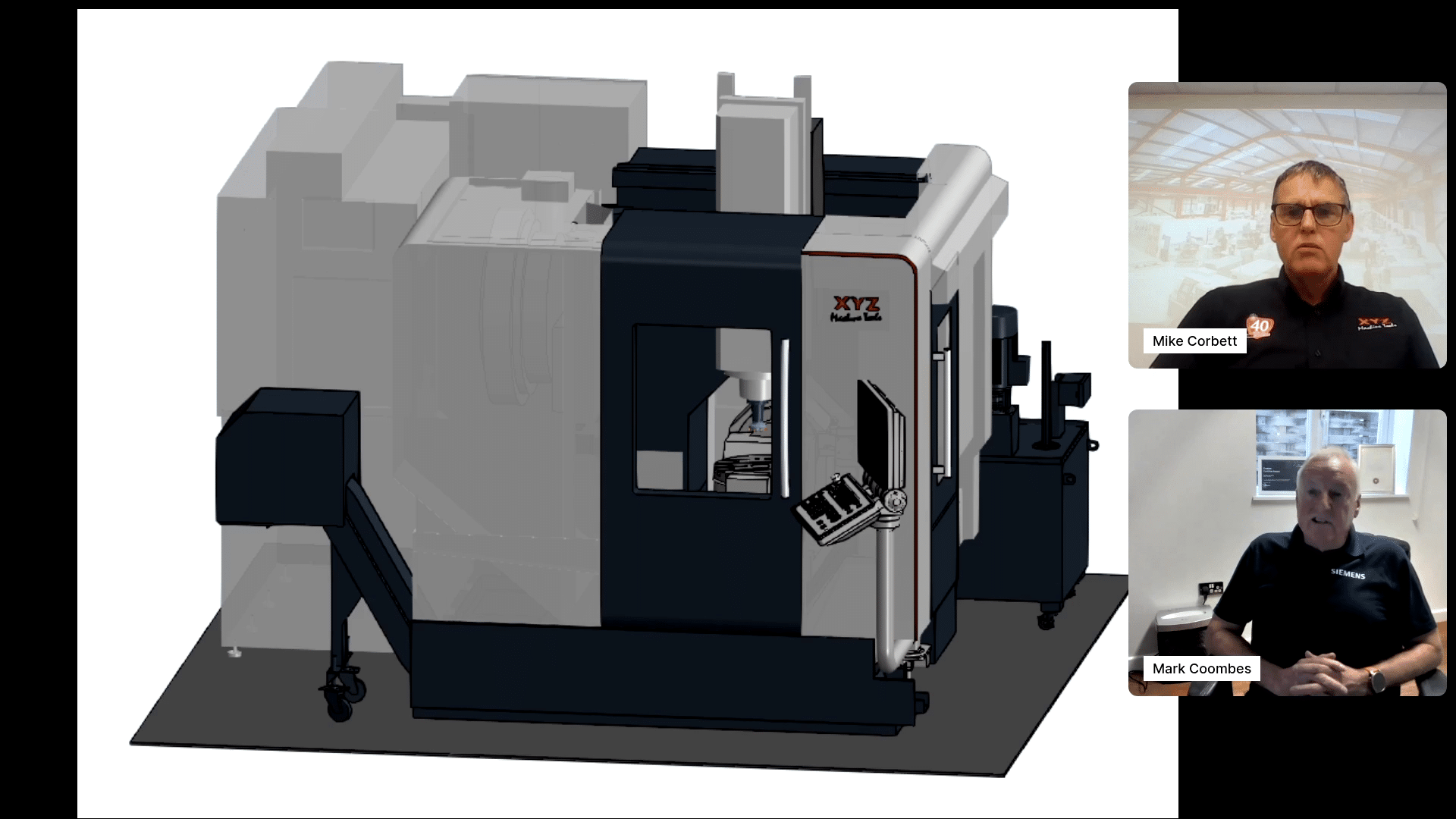
The webinar, available for download, is led by two industry experts: Mark Coombes, Head of Machine Tools at Siemens UK & Ireland; and Mike Corbett, Product Presenter at XYZ Machine Tools, better known as ‘Machining Mike’. It explores how digital technologies can help manufacturers tackle some very familiar shop-floor problems, beginning with the ability to validate a machining process virtually, before moving into ways of optimising the process while the machine is actually cutting.
Validate before machining
Digital-twin technology is becoming an increasingly hot topic across the manufacturing sector, but its practical value to everyday machine shops can sometimes appear less obvious. The webinar demonstrates a more tangible way to think about this technology. Rather than treating a digital twin as simply a 3D model of a machine, Siemens describes it as a high-fidelity virtual representation of the physical machine, its CNC system and the machining process itself.
Using a digital-twin platform, the webinar demonstrates how programmers can work with a virtual representation incorporating the CNC control, HMI, machine control panel, tool offsets, work offsets, machine data and programs. This capability opens up the possibility of preparing and checking work away from the physical machine, allowing production equipment to remain available for manufacturing rather than remaining occupied by component programming and proving.
The potential benefits go way beyond simply checking whether a program will run. Virtual validation can reveal programming errors and incorrect tool information, as well as CAM posting problems, while simulation can provide a far more realistic indication of machining time. For manufacturers quoting work, the latter point can prove particularly significant. A more accurate understanding of how long a job will actually spend on the machine can feed directly into production planning and costing.
Beyond the program
The webinar moves from program validation to something even closer to the physical machining process. CNC code can appear perfectly valid from a programming perspective yet still create problems when combined with the actual machine set up.
Tool projection, holders, fixtures, workpiece geometry and machine kinematics all matter, particularly as machining moves into increasingly complex multi-axis territory. The webinar demonstrates how 3D simulation can bring these elements into the virtual environment, allowing examination of the complete set up prior to reaching the machine.
Collision detection is one obvious application, but the wider principle is perhaps more interesting. Instead of discovering that a tool or fixture – or machine movement – is incompatible during a first-off operation, manufacturers are able to identify potential problems while the process is still virtual.
This workflow also creates opportunities for operator training. The virtual machine provides a risk-free environment in which operators can get familiar with controls, machine motion, datums and programs without occupying production equipment or putting a physical machine at risk. For machine shops dealing with skills shortages, the gains are clear to see.
Optimise while cutting
Of course, virtual validation is only half the story. With program prove-out complete and the machine producing parts, there’s still a question of whether the process is running as efficiently as it could. This is where ACM Suite (Adaptive Control and Monitoring) enters the picture.
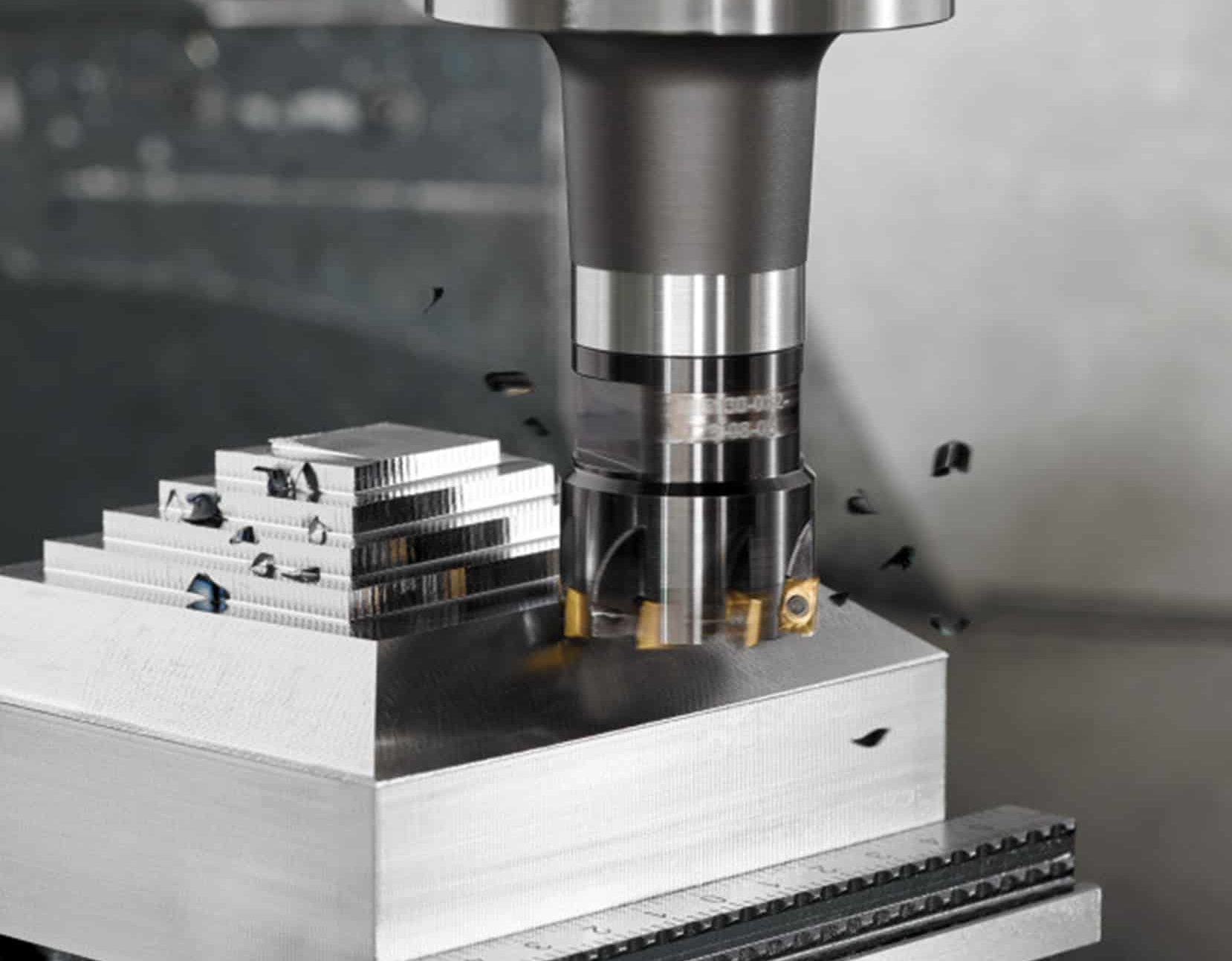
The webinar introduces this type of software as a collection of applications that use real-time data to optimise machining performance. Capabilities include adaptive feed control, tool breakage, anomaly detection, dynamic tool-life management and structured data analysis among others.
The underlying idea is straightforward: instead of relying entirely on fixed cutting parameters, the system can respond to what’s actually happening at the cutting tool. If machining load climbs, the system can reduce feed rate to protect the tool. In a similar vein, if conditions allow a higher feed, the system is able to increase it. Furthermore, tool monitoring can identify breakages or abnormal behaviour, while tool-life management helps avoid replacing tooling simply because it’s reached an arbitrary number of parts.
Machine shops can therefore forget about setting machining parameters once and hoping they remain appropriate, and transition to using machining data as a means of continually improving the process.
Practical demonstrations
The webinar goes considerably further than explaining how these digital technologies work. A practical machining demonstration shows how adaptive control can minimise cycle time, while further examples illustrate how the technology is applicable to high-volume production and more demanding materials.
There’s also an important consideration for smaller manufacturers. Digital optimisation does not necessarily require a large engineering or data analysis resource. The webinar examines how a relatively straightforward software implementation can provide access to capabilities that might otherwise seem the preserve of much larger manufacturers.
This premise makes the progression from virtual validation to real-time optimisation particularly pertinent to the UK machine shop community. The first step is reducing risk before production starts. The next is using information generated during production to identify where further improvements are possible. Together, the two approaches create a digital thread from programming and process validation to actual machining performance.
The most important message from the webinar? Well, perhaps this one: digitalisation does not have to mean transforming an entire machine shop overnight. It can start with a specific problem – avoiding collisions, validating programs, reducing cycle times – and building from there.
To see the demonstrations, explore digital-twin platforms and real-time machining optimisation in more detail – and discover the eye-opening performance results available to adopters of these digital technologies – download the full webinar at the link below.
Want to know more about this article?
Ask us below...