Crankshaft plant automates dimensional inspection

3 Mins
Published in Quality & Metrology
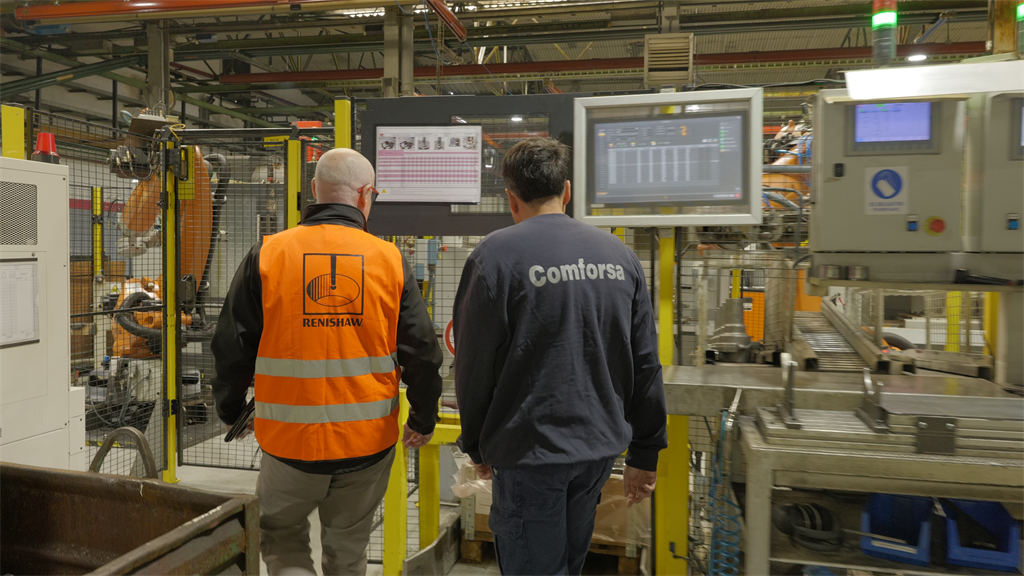
Suppliers to the industrial vehicle and heavy machinery sectors face a relentlessly demanding trading environment. Cost and margin pressures are intensified by raw‑material volatility, rising energy and logistics costs, not to mention the strong bargaining power of major OEMs.
Comforsa (Comercial de la Forja S.A.U.) is a Catalan metallurgical group specialising in components for the heavy vehicle and machinery sectors, notably crankshafts. The company has supplied brands including Volvo and Liebherr, exporting around 95% of its production. More than 380 employees work across four production sites in Catalonia in the province of Girona, which has historic association with forging.
The game plan
Comforsa’s industrial plan focuses on improving overall group performance and maintaining manufacturing leadership through sustainable, efficiency-led growth. The company is prioritising key indicators such as rejection rates, alongside critical processes that include component inspection.
Comforsa-4 (Comforsa number 4 site), specialises in crankshaft machining, supported by a fully equipped workshop housing processes such as CNC machining, grinding and balancing. The focus is typically on medium- and low-volume batch sizes.
Dimensional inspection has traditionally relied heavily on manual intervention, a strategy that increased both variability and cost at Comforsa. The company subsequently set out to optimise the inspection of critical features, blending quality and repeatability with efficiency to reduce rejection rates without compromising production pace.
Gauging the way forward
In terms of efficiency, the improvement is notable. It was previously the responsibility of operators to perform inspection tasks, which meant greater dependence on manual intervention and the risk of human error.
“With Renishaw Equator™ gauging systems, we’ve reduced the need for direct labour while still inspecting 100% of critical features,” reports Xavi Serra, Technical Lead at Comforsa-4 (Spain). “This automation helps us optimise costs and increase reliability.”
Equator gauging systems from Renishaw are high-speed gauges designed to boost throughput, repeatability and ease-of-use in medium or high-volume manufacturing environments. For this reason, hundreds of manufacturers worldwide continue to replace their current gauging method with Renishaw Equator systems.
The Equator platform is configurable with hardware, software and accessory options to optimise manufacturing processes accordingly. Highly repeatable and accurate, their speed and efficiency keeps pace with production lines and reduces scrap. Importantly, the versatile and reprogrammable Equator systems are thermally insensitive and designed for shop-floor use.
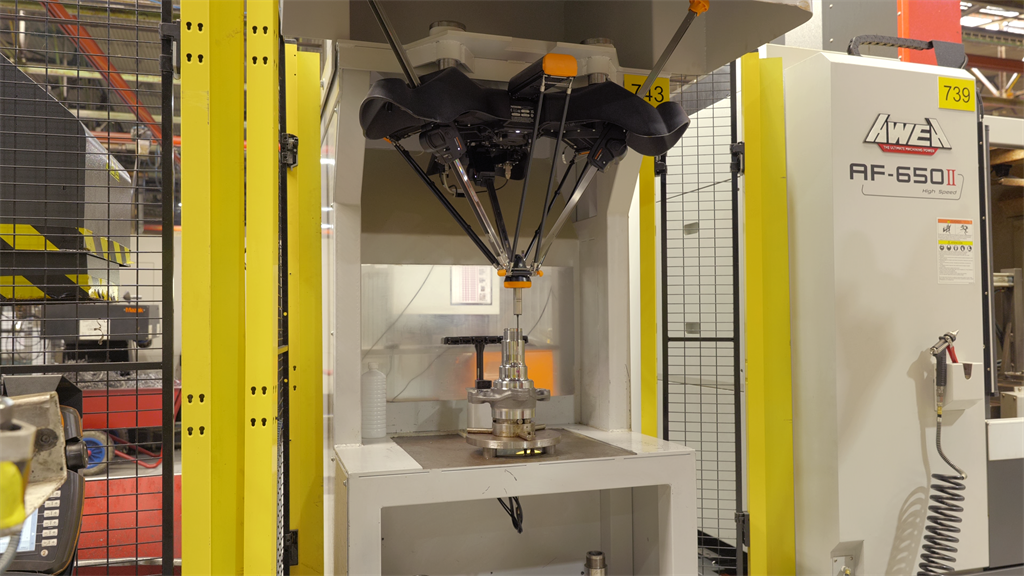
Robot-loaded systems
Comforsa deploys two robot‑loaded Renishaw Equator gauging systems on separate lines at the Comforsa-4 site.
The company can update programs quickly to accommodate new parts on the first production line, where output varies weekly. In fact, the Equator system can switch between different components in seconds. Changeovers see further simplification through the use of interchangeable fixture plates with repeatable kinematic location, without any impact on throughput. Together, these capabilities have led to significant improvements in the efficiency and flexibility of this production line.
On a second production line with longer runs, the Equator gauge’s comparative measurement method delivers high efficiency via fast measurement cycles. Rapid re‑mastering also compensates for thermal variation, ensuring consistent process control.
Both systems are integrated with Renishaw’s MODUS™ metrology software, which allows Comforsa to share and reuse inspection programs across the Equator™ systems and the company’s co-ordinate measuring machine (CMM). As a result, the plant’s able to maintain inspection consistency and simplify program management on the shop floor.
As a further point of note, Renishaw’s expertise not only eliminates compatibility concerns, it streamlines procurement and provides a single point of contact for technical support and maintenance. It also guarantees consistent quality standards across components, simplifying training for operators and enabling the seamless implementation of future upgrades.
Results
Introducing Renishaw Equator systems has helped Comforsa improve part quality and overall production efficiency.
“We’ve improved our rejection rate and reduced rejection costs because, if there’s an issue, however small, the Equator gauges alert us and we make corrections in time,” comments Xavi.
In the long term, this move towards automated manufacturing will strengthen Comforsa’s reputation with international customers. The ability to guarantee reliable performance for components operating under extreme conditions supports compliance with the most demanding safety and emissions regulations. Such a high level of assurance is critical in regulated markets.
Comforsa’s collaboration with Renishaw ultimately transforms quality control into a competitive advantage. Moreover, it supports sustainable growth while improving efficiency in a highly demanding global market.
Want to know more about this article?
Ask us below...