Compact clamp features patented kinematics

2 Mins
Published in Workholding Technology
A new, compact, hydraulically-actuated clamp suitable for securing workpieces and fixtures in confined spaces, repeatably and with high force, has been introduced by Roemheld (UK). The B 1.8270 work-holding system is particularly suited to clamping castings, dies, moulds and fixtures prior to metal cutting, especially those that require holding on narrow grooves, recesses or pockets.
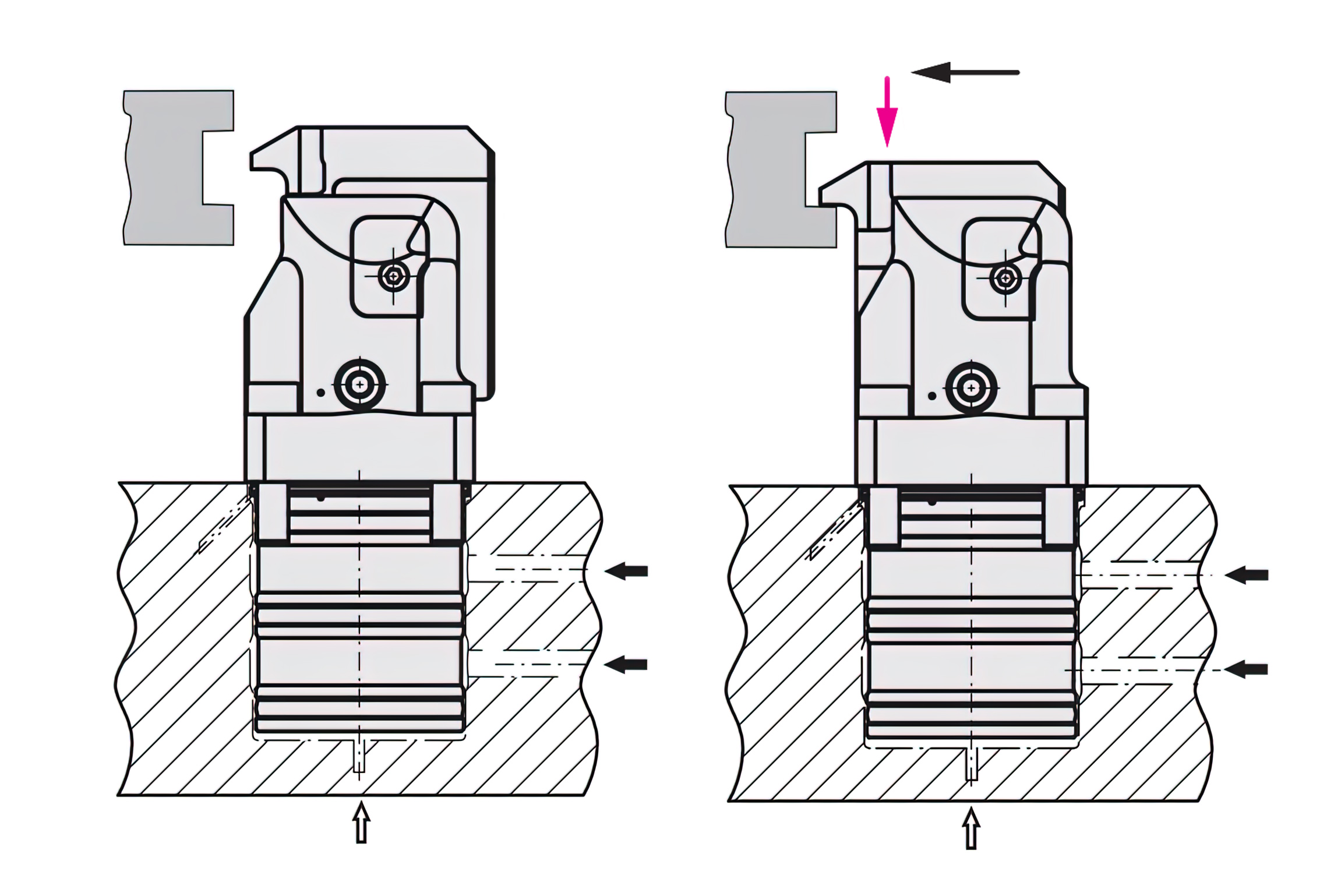
The design of the kinematics that allows such high holding force in a constricted area is sufficiently innovative to have been granted a patent. Rather than swinging or rotating into position, the clamping lever first moves horizontally to the point on the workpiece where it’s to be held and then moves vertically downwards to complete the operation. This movement sequence allows space-saving, precise workpiece clamping for machining. The high holding force means that fewer clamps are needed to secure a part, saving both set-up time and expense.
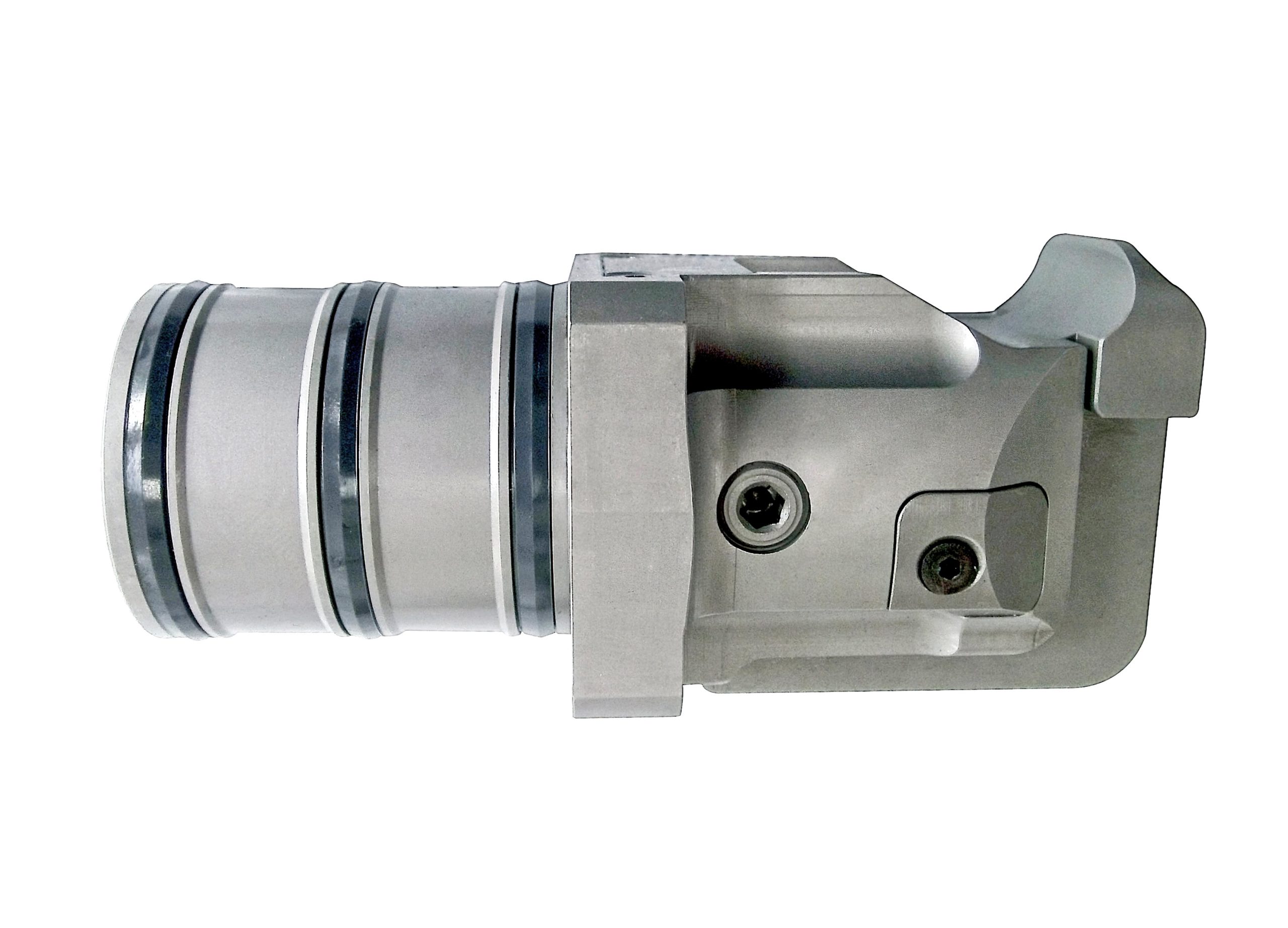
The product is supplied in a low-profile, plug-in design that does not need external pipework. Users can select from several configurations, including models with a standard short lever, a lever blank for custom adaptation, or without a lever to suit specific workpiece geometries. A quick-change mechanism allows easy lever exchange, providing flexibility for different work-holding tasks.
With a clamping force of 6.5 kN at the maximum operating pressure of 220 bar and a horizontal stroke of 8 mm, the hydraulically double-acting clamping element offers high performance, despite its small footprint. The work-holding action can be effected at any point along the subsequent vertical stroke of the lever, which is up to 4 mm. This capability enables the machining of a batch of workpieces that may have slight dimensional differences.
Constructed from hardened stainless steel and with nitrile butadiene rubber and polyurethane seals, the device is built to withstand rigorous industrial conditions up to 80°C. To ensure process reliability in automated production environments, the unit is available with optional pneumatic position monitoring to confirm either clamped or unclamped status. A third variant may be supplied without position control.
Volker Schlautmann, Head of Value Stream at Roemheld, comments: “With this clamping element, we’ve solved a problem that many manufacturing companies are familiar with. The kinematics enable clamping operations that were previously not technically feasible or only possible with considerable effort. At the same time, the installation position can be flexibly selected and, for tight installation configurations, the plug-in design with internal channels for the hydraulics means it can be mounted without the need for external piping.”
Want to know more about this article?
Ask us below...