Turning parts and turning heads

4 Mins
Published in Turning Technology
There are plenty of subcontract machining companies that talk about investing in new technology. Then there’s C&M Precision.
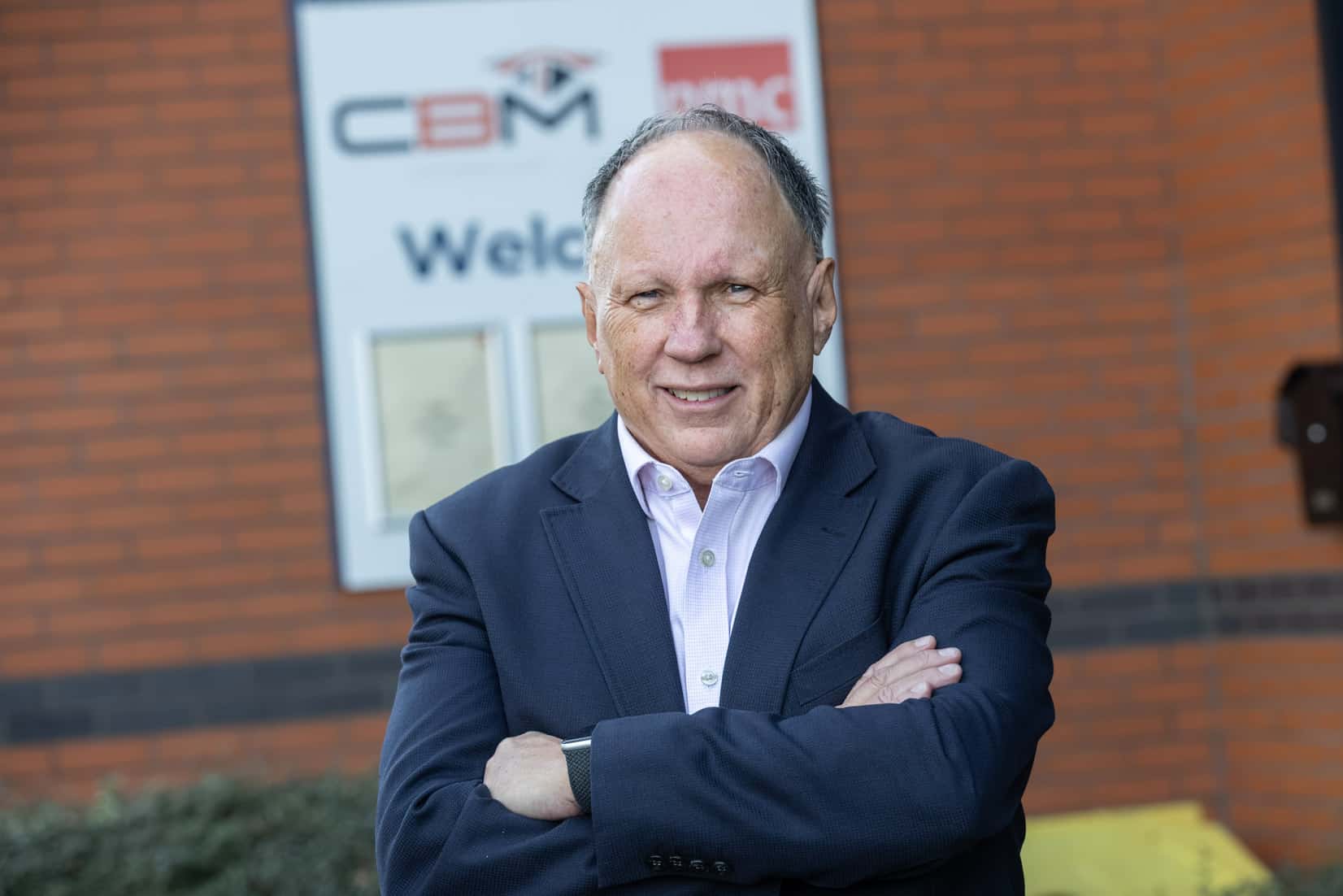
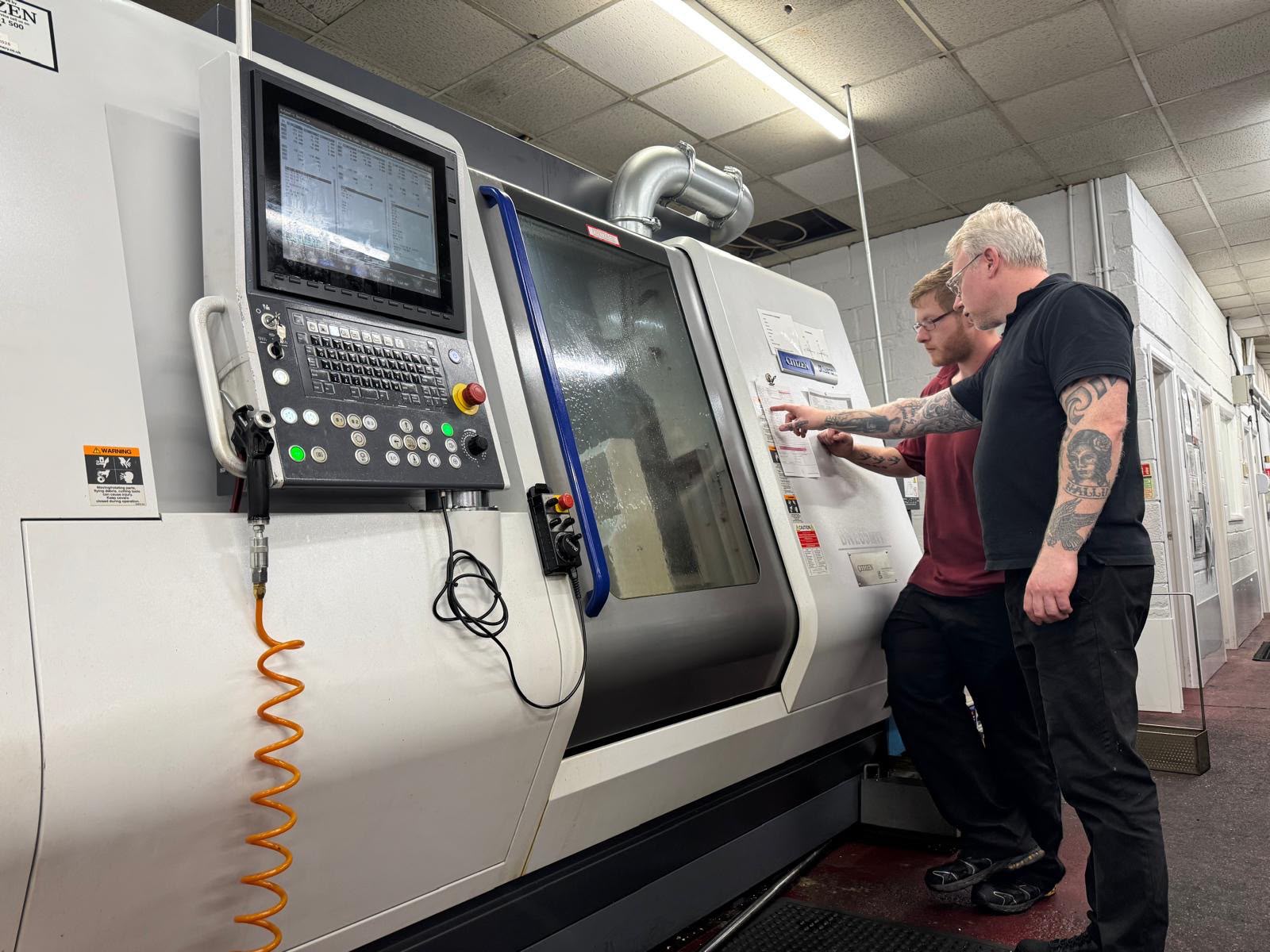
For founder and Managing Director John Cable, investment has never been a reaction to market pressure or a way of keeping up appearances. Instead, it’s been a carefully considered strategy that has underpinned the company’s growth from a single lathe in a modest workshop behind an off-licence to a thriving business with 13 CNC machines from Citizen producing millions of high-precision turn-mill components in one hit every year.
Listening to John recount the company’s journey, one thing quickly becomes apparent: he’s always been prepared to take calculated risks if they improve capability, productivity or competitiveness.
In the beginning
“I completed a CNC apprenticeship at a local valve manufacturer,” he reveals, recalling the origins of his story. “It was the early days of CNC, and I was actually the first person in the UK to complete that particular module. But after qualifying I felt my salary wasn’t progressing as it should, so in 1991 I decided to go it alone.”
It wasn’t a decision taken lightly.
“My wife had just fallen pregnant with our first child, and I had to remortgage the house to raise the capital.”
John’s first purchase was a Hardinge CHNC-1 chucking lathe, installed in a 1,000 ft² workshop in Maldon, Essex.
“I started turning parts for two local hermetic seal manufacturers. It wasn’t long before customers wanted milling and drilling features as well, so I designed powered heads featuring Desoutter air motors that bolted to the turret. It provided simple milling capability and made me very competitive.”
As demand increased, so did investment. A move to much larger premises nearby brought a second Hardinge CHNC-1, followed by a third after securing a major gas industry contract.
“We were producing around 70,000 turned components a week on those machines.”
Never standing still
The investment journey continued through increasingly capable CNC lathes. John added slant-bed Hardinge machines with driven tooling before progressing to twin-spindle models with C-axis capability. Each purchase solved one problem but revealed another, prompting the next step forward.
“We then bought a twin-turret, twin-spindle machine from a different manufacturer. It was incredibly fast and won us a huge fuel delivery valve contract. We ended up producing around 3 million components. However, the machine proved problematic.”
The real turning point came after watching a customer use sliding-head technology.
“I was impressed with the speed and bought three sliding-head lathes. But that particular brand wasn’t right for us and the first one was heading back before the third even arrived.”
Then came the MACH 2004 exhibition.
“I saw a Citizen M12 CNC sliding-head lathe on the stand and bought it. That machine changed everything. I reckon it produced around eight million components before we finally replaced it this year. It was a complete game-changer. The rigidity was on another level, and reliable magazine bar feeding opened the door to reliable lights-out production, which remains central to our success.”
Investing with confidence
One Citizen machine quickly became several. The original M12 was followed by two M32-III models before C&M Precision continued expanding its fleet with larger-capacity sliding-head and Miyano fixed-head machines.
Today, the company’s shop includes 13 models supplied by Citizen Machinery: an M16, two M32-V, two L32-XII, two A32-VII, an L12-VIII, an L12-X, an L20-VII, a Miyano ANX42SYY and two Miyano BNE65MYY. Remarkably, much of that investment has been recent.
“I’ve spent around £1 million on machines from Citizen in the past 2½ years,” declares John.
The LFV advantage
While machine capability has continually evolved, John believes one recent innovation has delivered particularly significant gains.
“Citizen’s LFV technology is outstanding. I wouldn’t buy a machine without it.”
Low-frequency vibration (LFV) breaks long, stringy swarf into manageable chips, improving reliability during unattended machining.
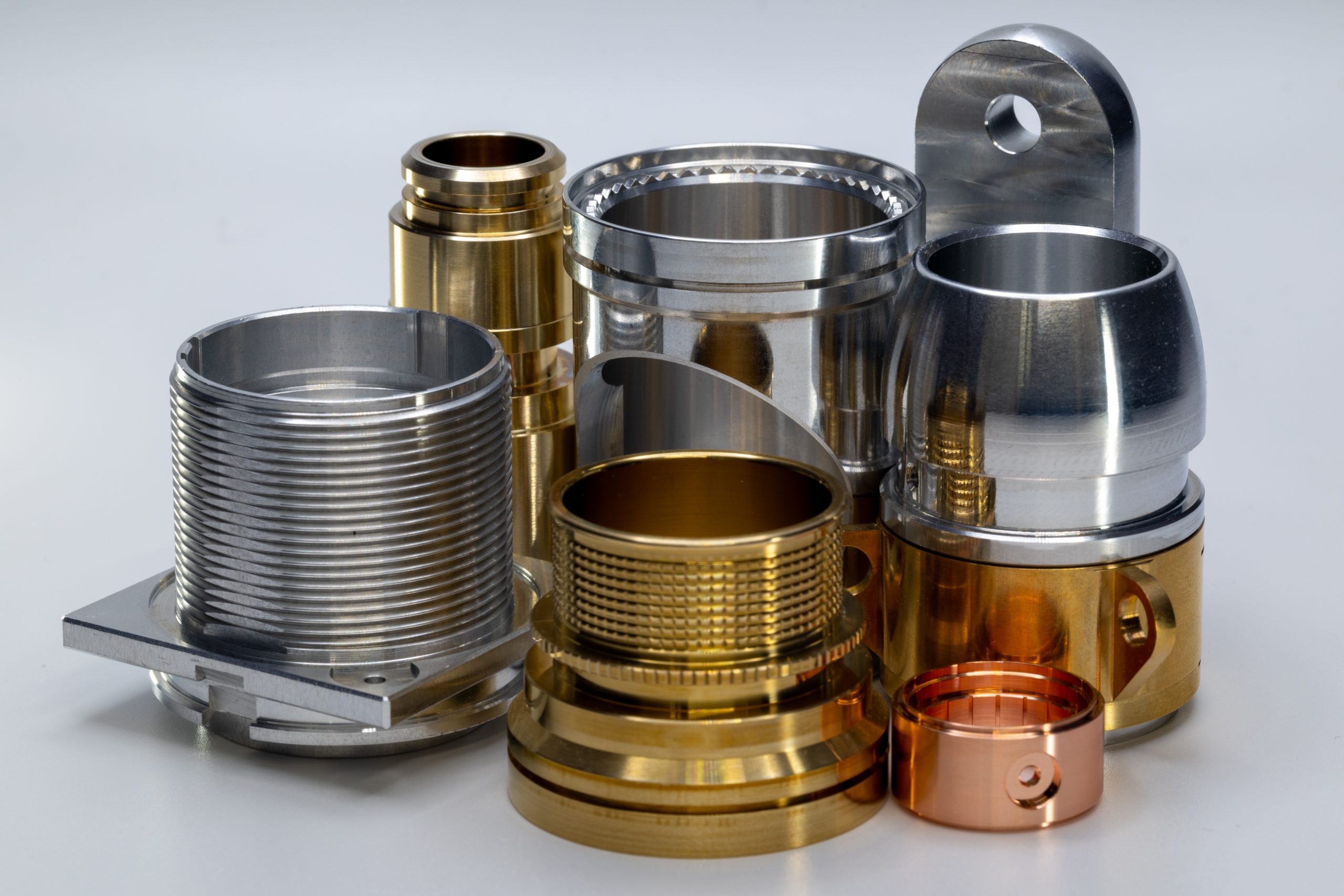
“Machine uptime increases massively because you’re no longer getting swarf wrapped around tools or damaging components when the sub spindle picks them up. Scrap rates just fall. We do a lot of pure copper, which is incredibly stringy, but LFV chips it almost like brass. It’s also transformed how we machine nickel alloys and plastics.”
His latest investment, a flagship Citizen M32-5M5 VIII equipped with multiple Y axes and four-axis LFV capability, represents another leap forward.
“When I visited Citizen’s factory in Japan in May, I saw one undergoing assembly, before the covers were fitted. Looking at the engineering, I thought wow, I’ve got to have one of those.”
Built for the long term
C&M Precision machines components from virtually every engineering material, including brass, bronze, copper, titanium, stainless steels, nickel alloys, plastics and more for sectors ranging from medical and defence to electronics, gas, motorsport, aerospace, security and more.
Batch sizes typically begin at around 500, while cycle times range from just six seconds to nine minutes depending on complexity and tolerances. Some of John’s longest-running customer relationships stretch back decades.
“The original gas industry contract I mentioned earlier is still going. We’ve produced millions of the latest-generation parts. Quality remains central to retaining business. Whether it’s a simple washer or a complex aerospace component, every part receives the same care and attention.”
State-of-the-art metrology equipment, ISO9001 accreditation and complete one-hit machining capability all contribute. Environmental responsibility also forms a core part of company strategy, with oil recovery from swarf, solvent recycling, air-source heat pump technology and energy-efficient Citizen machine tools all helping reduce environmental impact.
Looking ahead
Despite building one of the UK’s most successful businesses in its field, John shows little sign of slowing down, as demonstrated by his recent visit to Citizen and Miyano factories in Japan.
“It was incredible to see the blend of automation and craftsmanship. You come away understanding why the machines are so reliable. They underpin our success.”
Judging by the steady stream of machines arriving at C&M Precision, John has no intention of standing still. After all, when investment has been the driving force behind four decades of success, why change a winning formula?
Want to know more about this article?
Ask us below...