Optical sensors from Micro-Epsilon detect precise hole depth in turned parts

3 Mins
Published in Quality & Metrology
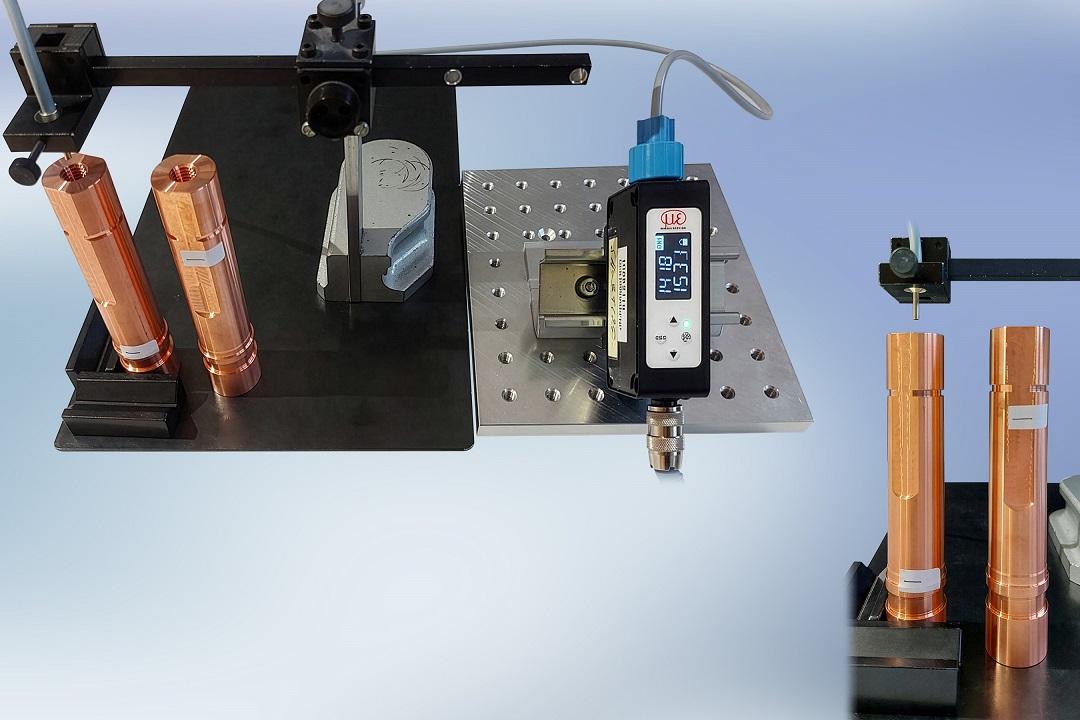
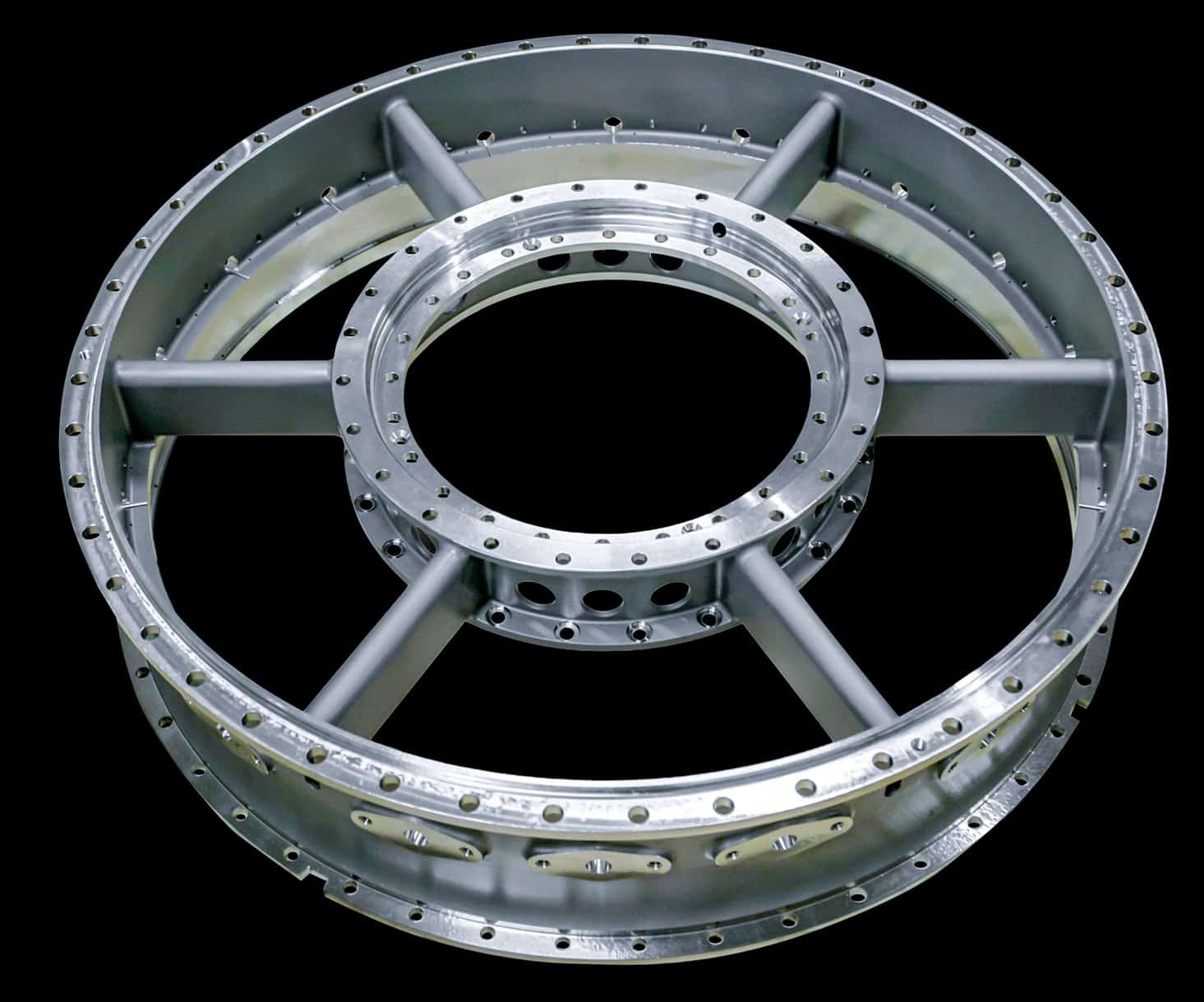
In turned metal components made from materials such as copper, precise hole depth is a critical quality feature. Conventional testing methods often reach their limits, particularly in the case of deep or very fine bores, as material properties, surface properties and limited accessibility can make measurements challenging. With the optoCONTROL CLS1000 series of controllers, in combination with the CFS4-A11 light guide reflex sensor from Micro-Epsilon, machine shops can detect hole depths on a non-contact basis, reliably and with high precision.
To detect the depth, the CFS4-A11 reflex sensor measures into the bore from above. The deeper the hole, the less reflected light is received by the sensor and the weaker the electrical signal. In this way, it’s possible to detect extremely small differences in depth of up to 50 μm. The measured values are output directly via the optoCONTROL CLS1000 display, which means rapid identification of deviations.
Precise depth measurement even with deep holes
Due to its small beam angle of 22°, the CFS4-A11 light guide reflex sensor is particularly suitable for measuring deep bores up to a maximum of 132 mm. The non-contact measurement is independent of material and surface, which enables stable testing even with demanding machined materials such as copper. As the sensors are adapted to customer-specific applications, the solution can be optimally integrated into existing manufacturing and testing processes. This ensures consistently high product quality and reduces the testing effort in series production.
Sensors to suit every application
The optoCONTROL CLS1000 optoelectronic system consists of a controller and a sensor (sensor head and glass fibre-optic cable). A wide variety of fibre-optic sensor heads and cables are available. The fibre optics come in different form factors and with focusing lens options, which means the optoCONTROL CLS1000 system can operate in a wide variety of demanding applications and environments, including with high temperatures, aggressive chemicals and vacuums.
The optoCONTROL CLS1000 controller comprises of a compact transmitter and receiver unit with integrated signal evaluation. The infrared light is transmitted to the object and back via a high-quality glass fibre optic cable that works on the principle of total reflection. The received light intensity is used for evaluation.
Due to their large sensing range of up to 2,000 mm, the sensors can detect components at great distances. The controller also has an extremely high resistance to ambient light of up to 50,000 lux, which increases process reliability when used in production plants and systems where intensive lighting is required.
With a robust, compact design, the optoCONTROL CLS1000 is particularly suitable for use in confined installation spaces on machines, robots and production lines. The controller has an OLED display for fast, easy configuration and parameter set up. All programming steps, status displays and set/actual values are visualised via a pair of four-digit digital displays. The optoCONTROL CLS1000 has numerous teach-in methods including switching output functions, on/off delays, pulse output and adjustable hysteresis.
CLS1000 controllers are available in five different versions: CLS1000-QN with antivalence function (normally open/normally closed), CLS1000-2Q with two switching outputs, CLS1000-OC with optocoupler, CLS1000-AU with voltage output and CLS1000-AI with current output. Each model is available in NPN, PNP or push-pull versions. All controllers are also available with or without triggers.
Fibre-optic sensor range
The optoCONTROL CFS range of fibre-optic sensors (sensor heads and cables) can be adapted to meet customer-specific applications. Special types of sensor are available for reflex (one-way) mode, reflex mode V-arrangement (two-way system), transmission mode (two-way system), and multiple reflex mode (transmitting and receiver units are statistically mixed in two or more separate sensor heads).
A range of cable sheaths (e.g. PVC, metal, silicone-metal, VA stainless steel) are provided in various fibre bundle diameters (0.6 to 3 mm), lengths (0.3 up to 2.4 m) and aperture angles. Special versions of the sensors are available with increased vibration resistance (VS), special bonding for high temperatures (T250/T400), and pressure-tight variants with vacuum feed-through (up to 10-5 mbar).
Sensor heads are available as straight output, 90-degree output for confined installation spaces, with wide light band, with and without external thread, or as thin bendable sensor heads.
Want to know more about this article?
Ask us below...