FANUC sets out top three trends in robotics for 2026

3 Mins
Published in Automation & Robotics
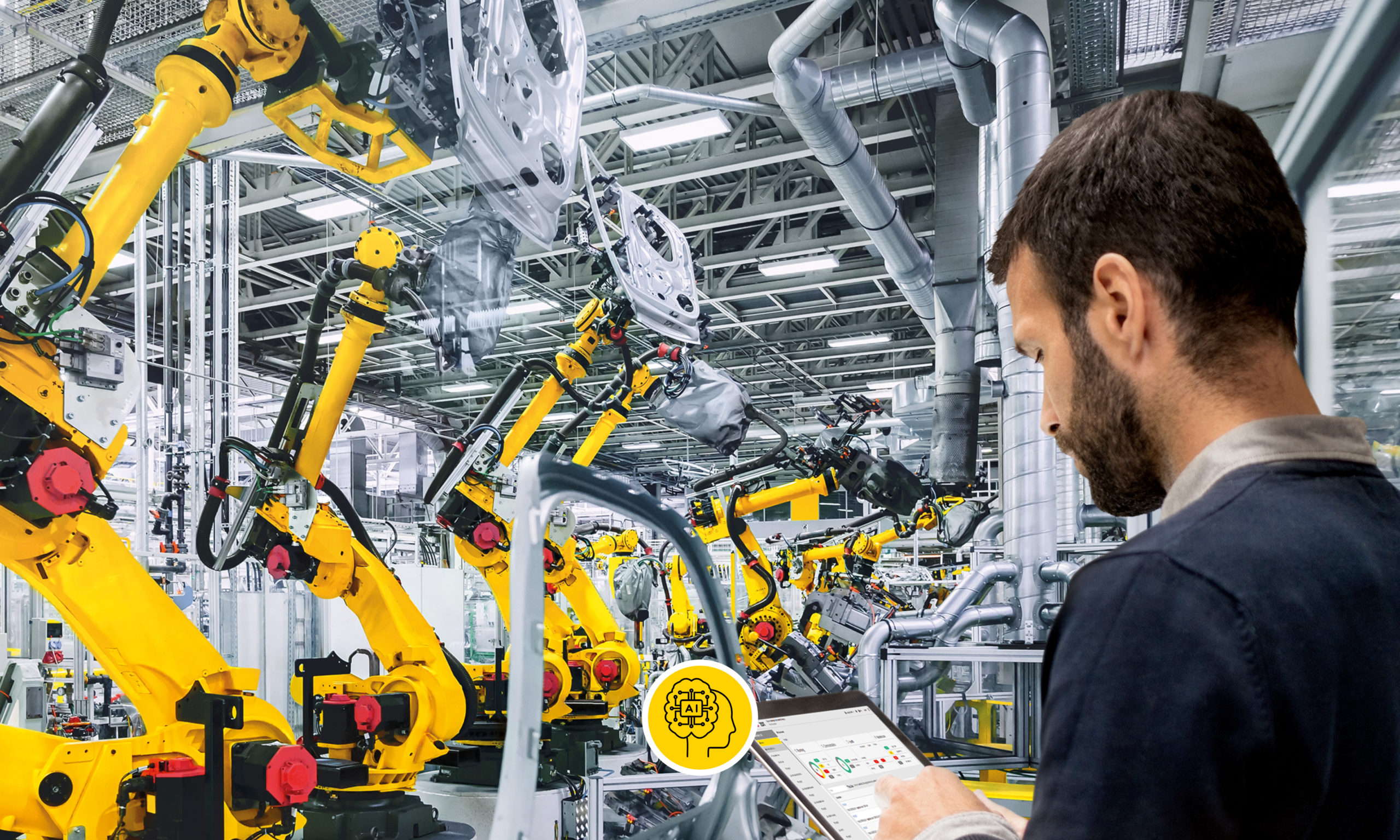
The industrial automation landscape is rapidly evolving. Across manufacturing, a growing number of sectors are investing in robotics to boost efficiency, ensure consistent product quality, address labour shortages, and enhance health and safety. As robot manufacturers such as FANUC work to make automation accessible to businesses of all sizes – from small-scale food producers to tier-one automotive suppliers – advanced technologies like AI are playing an increasingly important role. Against this backdrop, FANUC is highlighting three key robotic trends for 2026 that are set to take industrial automation to the next level.
- AI-driven robotics
AI is making robots smarter, safer and faster to deploy. Through voice-controlled operation, adaptive motion control, safety-aware human-robot collaboration and virtual commissioning via digital twins, AI is transforming industrial automation.
One of the most significant benefits of AI is its ability to accelerate deployment. By assisting with code generation, AI makes it easier and quicker for companies to implement robotic systems. Non-specialists can use natural language to program robots to perform tasks, reducing the engineering burden on manufacturers and delivering a faster return on investment (ROI). AI-enabled robots will also support the retrofitting of existing production lines without extensive modifications, further accelerating automation roll out.
In addition, AI expands opportunities for collaborative applications. With AI-driven voice control, robots can interpret spoken instructions and autonomously generate the code needed to execute tasks. This capability will enable robots to work more flexibly alongside human operators, adapting in real time to changing requirements.
As a further point of note, AI will enhance robot safety and enable closer human-robot collaboration. For example, integrated vision systems allow robots to detect obstacles in their environment. AI can then instantly recalculate motion paths in 3D space, ensuring safe and efficient operation around people and equipment.
- Smart and scalable automation
Automation is becoming increasingly adaptable. Smart, scalable robotic solutions that can evolve alongside changing business needs are enabling manufacturers to de-risk automation investments without compromising on quality or reliability.
Smaller, more agile automated systems are also helping manufacturers address labour challenges, particularly for low-skilled or repetitive tasks such as picking, placing and palletising. At the same time, suppliers are prioritising ease of deployment through simplified teaching methods, AI-enabled voice control, and intelligent technologies such as vision and force sensing. As a result, the path to automation is now faster and more accessible than ever before.
Alongside these technological advances, end-user attitudes towards ROI are shifting. Rather than focusing solely on upfront purchase price, manufacturers are increasingly considering total cost of ownership (TCO), factoring in long-term considerations such as maintenance, downtime and energy consumption when making a purchasing decision.
Automation solutions are subsequently becoming more flexible, affordable and user-friendly than ever before. These smart and scalable systems are set to help more manufacturers overcome labour shortages, enhance product quality and consistency, and drive meaningful gains in productivity.
- Open ecosystems and partnerships
The future of industrial automation is collaborative. Open platforms and partnerships between hardware and software providers are enabling more flexible, integrated solutions that accelerate innovation and adoption.
FANUC is actively collaborating with leading AI technology partners, including NVIDIA, helping to unlock the potential of physical AI. A key step in this journey is our support for the open-source robotics platform ROS 2, which enables programming via Python. By lowering the barrier to entry, this allows developers, researchers and companies to build AI-driven robotics applications on FANUC’s proven industrial hardware.
One important benefit of this openness is a smoother transition from education into industry. ROS 2 and Python are widely taught in colleges and universities. Making these tools available on industrial equipment will allow more young engineers to apply familiar skills directly in real-world manufacturing and automation environments.
More broadly, open platforms such as ROS 2 and Python will help to stimulate a new wave of innovation, enabling companies to build, customise and scale AI-augmented robotics solutions while leveraging their own software expertise on top of FANUC’s hardware and NVIDIA’s simulation infrastructure.
FANUC is inviting the manufacturing community to attend its ‘Future of Precision Engineering’ event (27-29 January 2026, FANUC UK, Ansty Park, Coventry), where they can discover the automation innovations set to shape UK manufacturing.
Want to know more about this article?
Ask us below...