Expanding mandrels are underutilised

4 Mins
Published in Workholding Technology
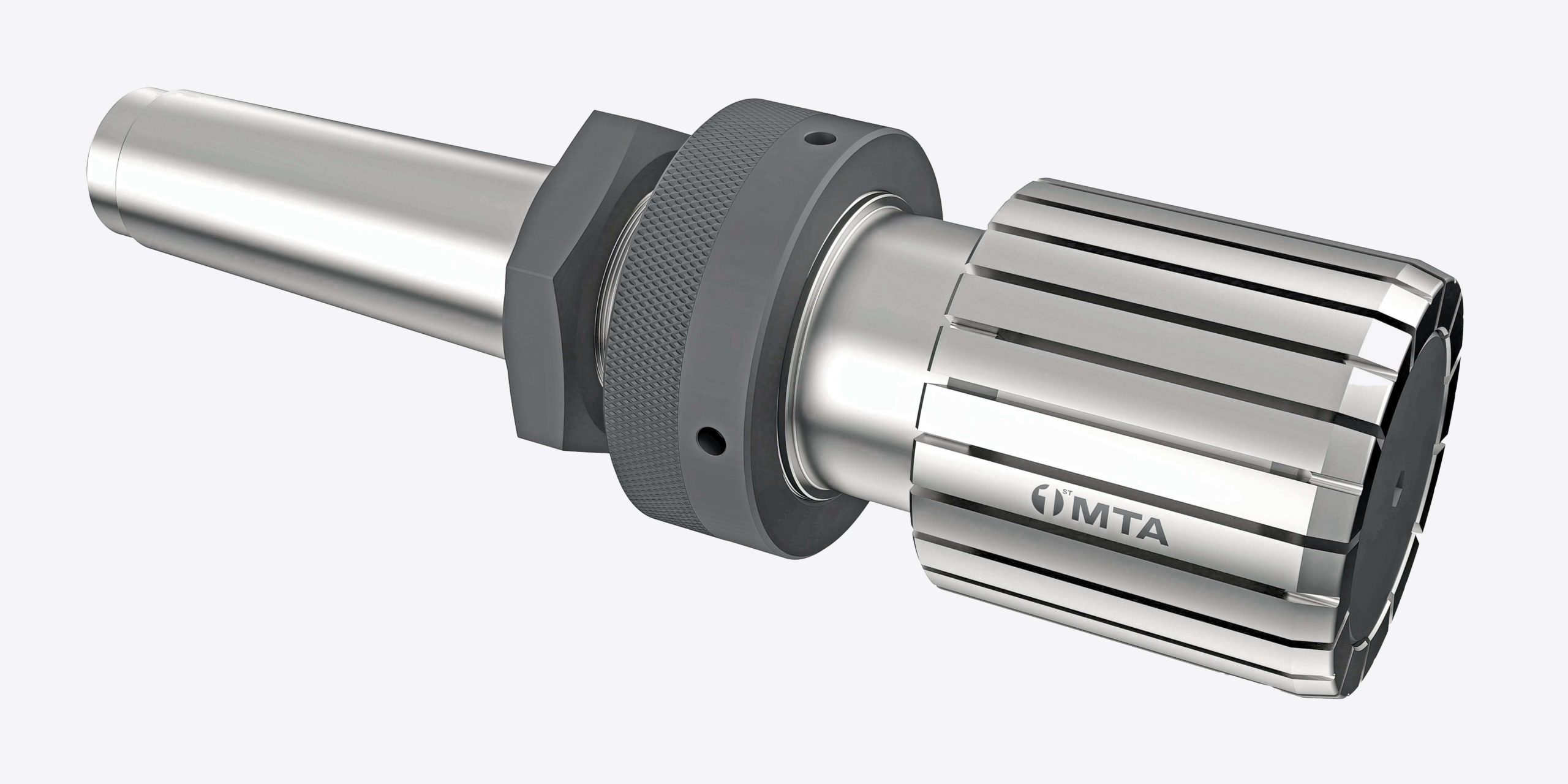
1st Machine Tool Accessories explains why the accurate gripping force of expanding mandrels is ideal for high-volume machining to tight tolerances.
Workpiece clamping and automation systems specialist 1st Machine Tool Accessories offers to subcontractors and OEMs in Britain and Ireland a comprehensive range of high-precision expanding mandrels, both standard and bespoke, supported by an experienced design and development team in Salisbury. The company is an enthusiastic advocate of this method of clamping components by their ID (internal diameter) for machining and is of the opinion that their advantages are not harnessed by machinists nearly as often as they should be.
The standard, modular range comprises manually, pneumatically or hydraulically actuated types capable of automatically gripping a range of internal diameters from 12.5 to 178 mm. Each features a generous expansion to enable a range of diameters to be accommodated and the gripping surface may be ground to suit non-standard bore sizes. Numerous product adaptations and full turnkey solutions are available to meet especially complex requirements and the lead time for delivery is rapid.
The expanding mandrel is increasingly recognised as a superior workholding solution for high-precision CNC turning, cylindrical OD (outside diameter) grinding, and multi-axis prismatic milling and drilling. It offers a level of stability, repeatability and concentricity that is difficult for traditional three-jaw chucks and standard collets to match. TIR (total indicated runout) below 0.005 mm is routinely achieved using mandrels, a major advantage for precision machining. It compares favourably with values for a three-jaw chuck, which range from 0.02 to 0.05 mm, or 0.01 to 0.02 mm for a high-quality collet.
Holding in the ID leaves the entire OD of the part exposed and accessible to the cutter. It allows all external features, including shoulders and complex profiles, as well as the component face, to be machined completely in a single set up, which is unattainable when external clamping obstructs the surface. Using a previously-machined bore as the primary datum for subsequent operations, the mandrel ensures accurate concentricity and perpendicularity with external features.
Unlike external clamping, which can introduce distortions in thin-walled or delicate parts due to variations in jaw pressure at discrete points around the circumference, the mandrel provides uniform pressure all around the surface of a bore. Furthermore, for components with a ground, polished or finished exterior, internal clamping prevents damage to the OD, preserving the integrity and quality of the final product by eliminating jaw marks, scuffs and distortion.
In the sub spindle of a bar-fed, twin-spindle lathe, for example, the work-holding technique inherently provides better alignment of the workpiece and spindle axis, as it eliminates the eccentricities and jaw pressure variations associated with chucks and the limited gripping surface afforded by collets.
If a lathe runs chuck rather than bar work and robot or cobot machine tending is installed, a slight taper can be machined on the end of the sleeve of the mandrel in the sub spindle to allow for any small inaccuracy in end effector position during automated transfer from the main spindle. Exceptionally, if tube rather than billet is being turned, it may be appropriate to use a mandrel in both work spindles.
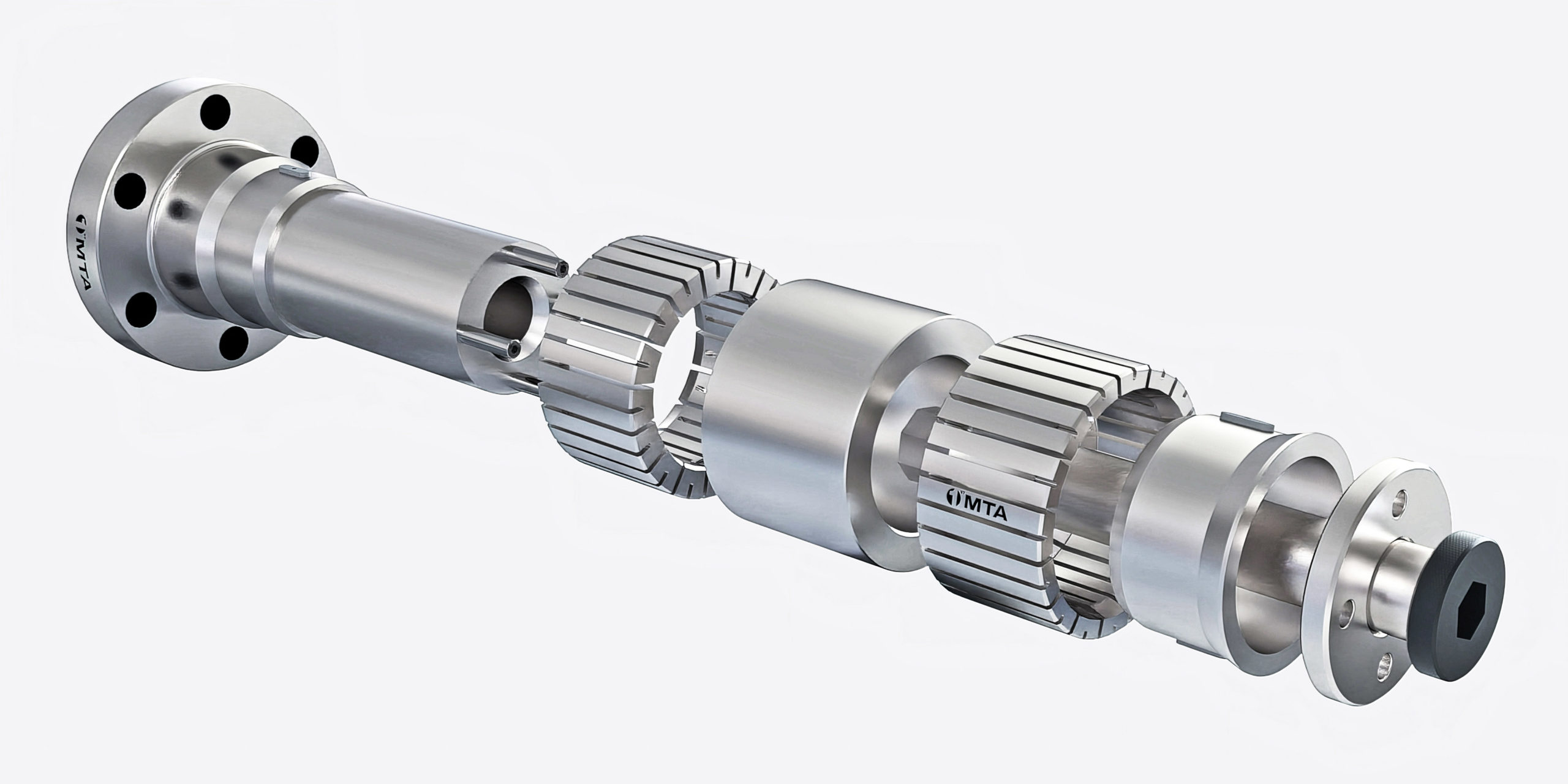
For applications demanding the highest rigidity and accuracy, the advanced design of 1st MTA mandrels incorporates a double-taper, dual-contact system. The configuration ensures true parallelism between the workpiece bore and the spindle, eliminating deflection and chatter during cutting. By engaging the component’s bore at two distinct points near the front and the rear, the system ensures the component is pulled firmly and squarely against a precision-ground back face in the mandrel body.
Accurate axial location increases Z-axis repeatability and stability, which is essential for facing and grooving. The double taper also improves the mandrel’s resistance to torsional and bending forces generated during machining, allowing higher feed rates and heavier depths of cut without introducing chatter or run-out.
Efficiency may be enhanced using mandrels having inherent safety features. For automated and high-volume environments, some are designed to be pre-sprung and only require hydraulic or pneumatic pressure for release. In these systems, the spring mechanism keeps the mandrel in its expanded, clamped position by default, preventing accidental loosening in the event of a power or pressure failure.
For securing particularly long, tubular, thin-walled components up to one meter in length, or even more, mandrels can be equipped with multiple sleeve segments, sometimes as many as eight or nine. They effectively distribute the clamping load evenly over a large area, guaranteeing minimal part distortion while holding components securely to absorb high cutting forces. It’s possible to program the closing sequence of the segments so that they grip sequentially to ensure positional accuracy.
Custom sleeves can be engineered to hold on non-cylindrical features, such as splines, gears or specific internal profiles, extending their applicability beyond simple bores. Whether turning or grinding, 1st MTA says the expanding mandrel delivers not only superior TIR but also greater grip consistency and longer tool life through reduced vibration, while lowering set-up time and scrap.
It’s less well appreciated that the work-holding solution is suitable for use on machining centres for securing parts during milling and drilling operations. If a prismatic component contains a hole, be it circular, square or hexagonal, it’s easy to machine that feature first and then clamp in it using an appropriately shaped mandrel to complete machining of other features on five sides, again to very precise tolerances.
Applications across many manufacturing sectors
The high precision and stability offered by expanding mandrels make them essential in highly regulated and exacting manufacturing sectors where dimensional accuracy and the integrity of critical components are paramount. The aerospace industry is a prime user, driven by its stringent quality standards, complex part geometries and reliance on precision. Expanding mandrels are critical in machining components such as turbine blades, blisks, aircraft engine parts and structural assemblies, which often feature thin walls, intricate shapes or require a high-quality surface finish.
The automotive industry, particularly for the production of high-performance vehicles, is another key beneficiary. Mandrels are employed for machining critical powertrain and transmission components, including parts like crankshafts, camshafts, transmission gears and steering components, where dimensional accuracy and surface quality directly impact vehicle performance, noise, vibration and harshness. As the industry shifts towards electric vehicles, the adoption of expanding mandrels will only increase in order to achieve the tight tolerances and consistency required for new electric powertrains.
Beyond these major sectors, mandrels are widely used for applications like gear cutting, grinding and inspection, railway component machining and valve manufacture. The common theme across all these industries is the need for a work-holding solution that can consistently achieve the highest levels of accuracy, resist heavy cutting forces without slippage or chatter, and guarantee that the final machined features are perfectly concentric and square to a previously established internal datum.
Want to know more about this article?
Ask us below...