Digital CNC Shopfloor: From Code to Cut

4 Mins
Published in Events
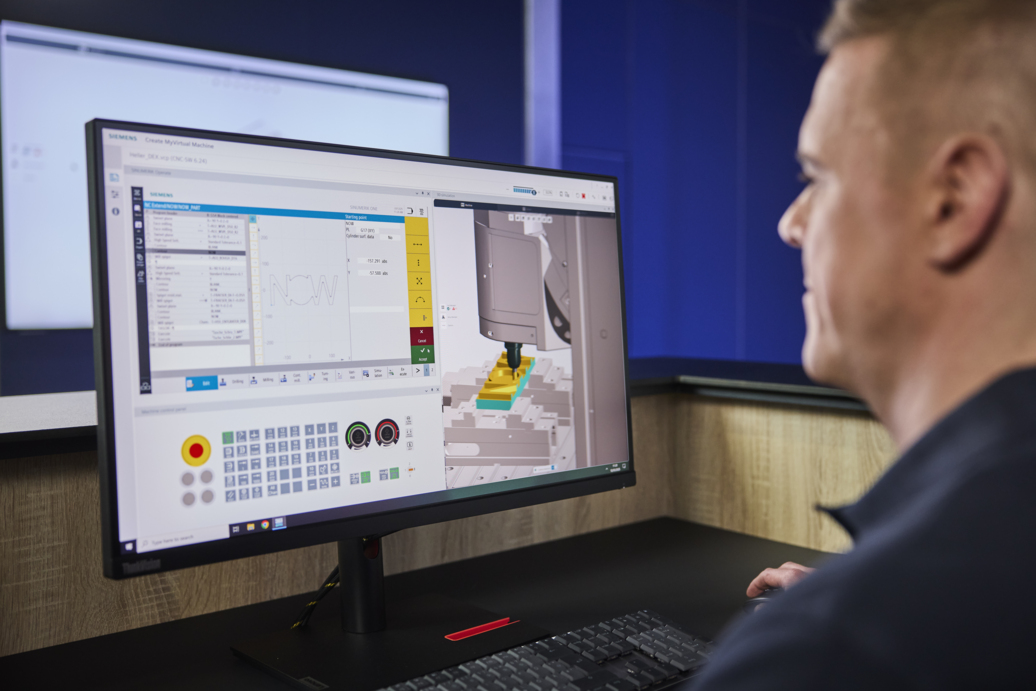
Walk on the Siemens stand at MACH 2026 (NEC Birmingham, 20-24 April) and you won’t just be looking at Computer Numerical Controls, you’ll be stepping into a joined-up digital manufacturing story.
“Digitalisation for everyone is the aim,” states Mark. “Not just for large manufacturing companies and OEMs but also for SMEs and job shops. Digitalisation can unlock productivity, boost resilience and improve competitiveness to futureproof your shop floor.”
It’s a message directed squarely at a long-standing misconception: that advanced digital manufacturing is complex, expensive and reserved for larger players. At MACH, Siemens is looking to reset that thinking.
The Challenges
Machine shops today are navigating a tricky mix of pressures. Productivity must improve, but costs such as energy, tooling and labour continue to rise. Skilled operators are harder to find, while customers expect shorter lead times and more customised parts.
At the same time, demand can spike quickly, so flexibility is just as important as efficiency. Put simply, manufacturers are being asked to do more, faster and with fewer resources, while maintaining consistent quality.
How Digitalisation Can Help
This is where digitalisation starts to make practical sense. Not as a big, all-or-nothing transformation, but as a set of tools that support different areas of the manufacturing process. Priority areas. From virtualising machining to optimising cutting conditions in real time and managing tools and data more effectively, digital technologies can unlock improvements across the board.The common thread is better visibility and control. When information flows more freely, decisions become easier, processes more stable and resources more efficiently deployed.
CNC Digital Twin
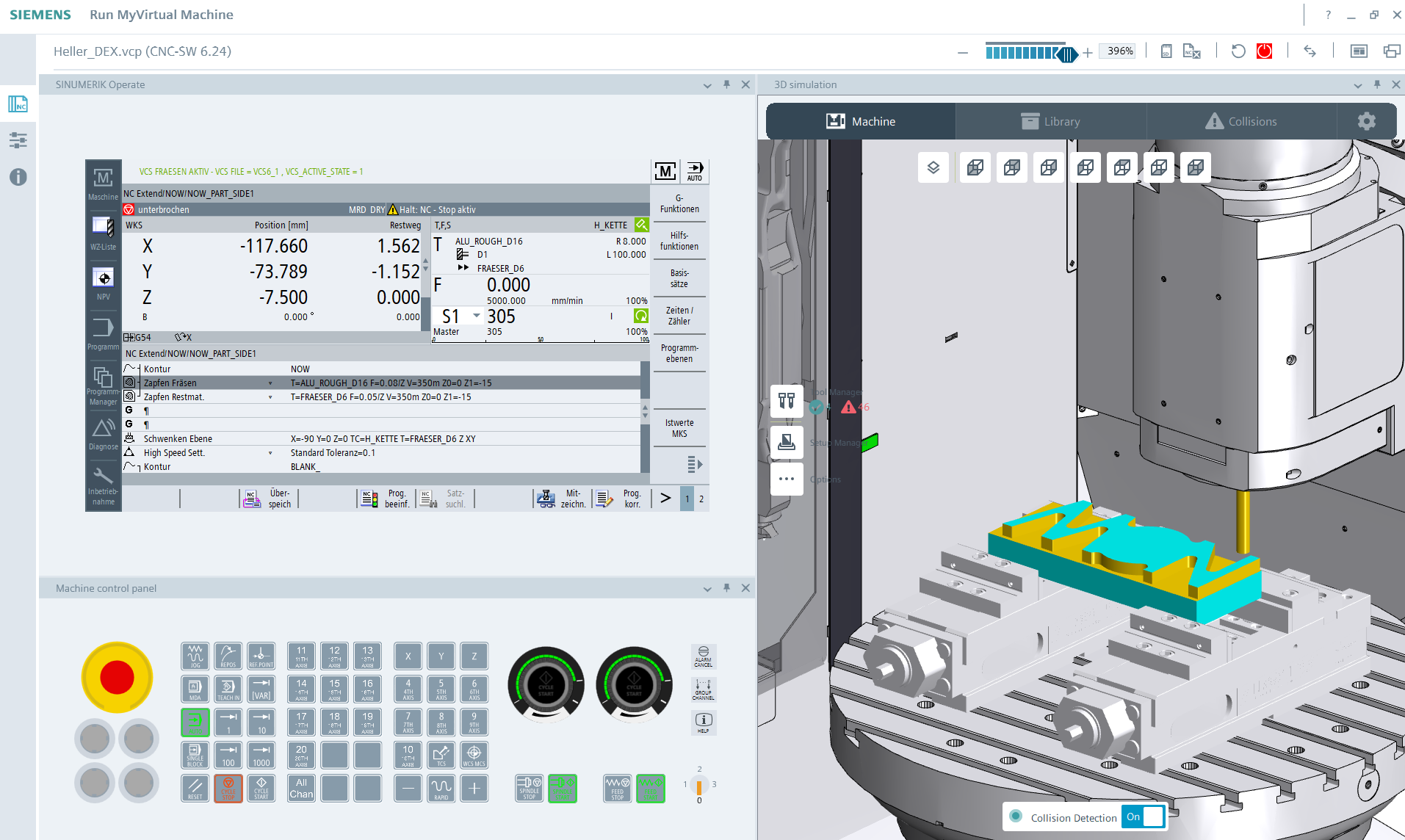
One of the most powerful facilitators of this shift is the CNC digital twin. At its core, a digital twin is a virtual representation of a machine, its control and the machining process. It allows manufacturers to simulate, validate and optimise operations before anything reaches the shopfloor.
“Programs can be tested in advance, supporting faster set-up times, reduced scrap and higher confidence, especially with complex or high-value parts,” notes Mark. “This isn’t just simulation, it’s preparation. Operators can be trained offline, while new jobs can be proven out before production begins.”
The concept extends into further areas. For instance, OEMs or other companies can create and modify digital twins of their physical machines, supporting parallel workflows, faster iterations, process change assessments and more.
Solutions such as Run MyVirtual Machine and Create MyVirtual Machine, part of the Siemens MACHINUM portfolio, support this approach, while complementary tools provide further safeguards. Protect MyMachine/3D Twin, for instance, ensures full machine protection against collisions based on the digital twin of the machine kinematics in real time.
The CNC Systems
Behind the digital twin sits the real NC kernel, the same core technology that drives the established Siemens SINUMERIK ONE and 828D controls for high-end and mid-range applications. For manufacturers, that link between the virtual and real worlds is critical. It ensures what’s proven digitally translates directly to the shopfloor. Modern CNC platforms are increasingly designed with this connection in mind, acting as part of a wider digital ecosystem.
While differing in scope, both the SINUMERIK ONE and SINUMERIK 828D (part of Siemens Xcelerator, the open digital business platform) support connected, digitally enabled workflows that leverage the benefits of the digital twin. As Mark puts it, the real value isn’t just in standalone performance, but in “how the control links and communicates with digital systems around the shop”.
Data-Driven Machining Process Optimisation
Another area where digitalisation delivers immediate impact is machining process optimisation.
With pressure on cycle times, tool life and consistency, manufacturers are looking for ways to improve performance without overhauling workflows.
Real-time, data-driven optimisation addresses that need by monitoring machining conditions and making small adjustments during operation. Instead of fixed parameters, the process becomes adaptive.
“It’s like having an experienced operator with their hand on the feed-rate override,” comments Mark.
In practice, this means automatically adjusting feed rates based on spindle load, while monitoring for issues like excessive torque or tool breakage. The result is a more stable process, better surface quality and reduced risk of scrap. Solutions such as Adaptive Control & Monitoring, part of the MACHINUM portfolio, bring this capability into everyday production. Users typically report productivity improvements of 10-25%.
Digital CNC Shopfloor Management
Beyond the machine, digitalisation plays a key role in shopfloor management. Tools, programs and production data are often spread across systems (or still tracked manually), leading to inefficiencies. A more connected approach brings these elements together. Tool management becomes far more effective when availability and location are visible in one place, enabling faster, better decisions. With machine shops under market pressure to do more with less, faster decision-making power opens the door to higher levels of agility, optimisation and competitiveness.
As Mark sets out: “If you’ve got a job scheduled, digital CNC shopfloor management allows you to see what tools are already available, what’s elsewhere in the factory, and what needs presetting. It supports a more streamlined, paperless process.”
Program management ensures the right data reaches the right machine, while maintaining control and traceability. At the same time, machine data analysis can provide insight into utilisation and downtime, with operator feedback adding valuable context.
Underpinning all of this is strong OT/IT connectivity, linking machines with MES (Manufacturing Execution System), ERP (Enterprise Resource Planning) or PLM (Product Lifecycle Management) software. Platforms like Siemens’ Mcenter, part of MACHINUM, function as an integration layer across mixed-machine environments. The result is a shopfloor that’s connected, transparent and easier to optimise.
A Practical Pathway
For many manufacturers, particularly SMEs, the biggest barrier isn’t the technology, it’s knowing where to begin.
“There’s long been a perception that digital enterprise is only for large companies,” says Mark. “But in reality, it’s for everyone.”
The key is flexibility. Rather than replacing everything at once, machine shops can introduce digitalisation step by step.
“Start small and scale fast. It’s about building on what you’ve got.”
Subscription-based Software-as-a-Service (SaaS) models from Siemens are also making adoption more accessible, allowing manufacturers to implement solutions in manageable stages.
Right Place, Right Time
After a period of uncertainty, there’s a growing sense that UK manufacturers are ready to move forward again. At MACH 2026, Siemens will showcase how digital twin, industrial AI, data-driven machining optimisation and connected shopfloor management come together as part of a broader digital thread. Visitors to stand 17-240 will see how digitalisation can move from concept to reality, delivering practical gains on shopfloors of every size.
Want to know more about this article?
Ask us below...