Burton launches laser cutting operations with Kerf installation

4 Mins
Published in Sheet metal
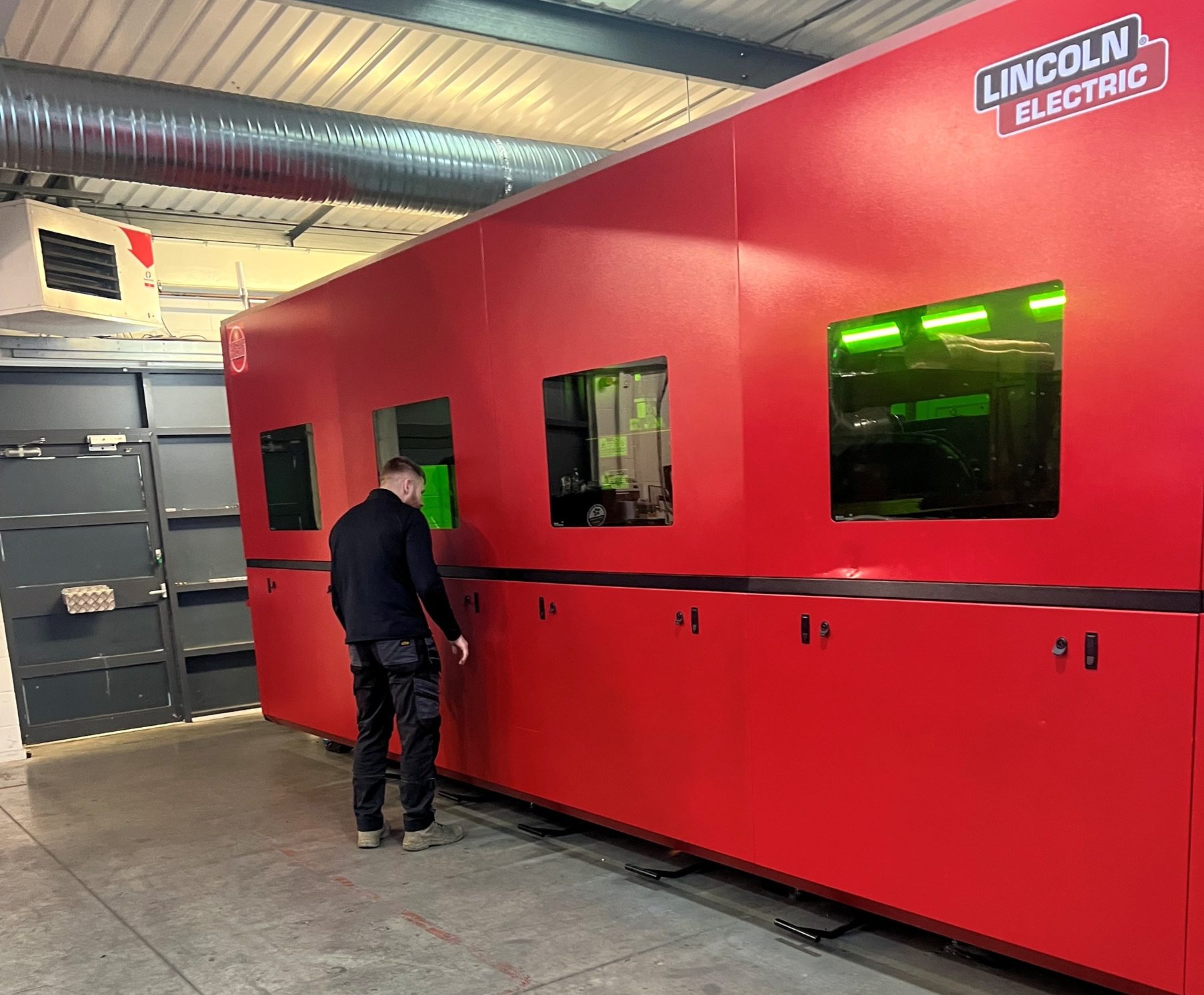
Burton Engineering Services, a Grimsby-based engineering company established in 2020, has made a strategic leap into laser cutting with the installation of a Lincoln Electric Linc-Cut 2040A fiber laser system. The 12 kW machine, supplied by Kerf Developments, represents a bold diversification for a company that has built its reputation on site services, breakdowns, repairs, and factory maintenance for the food and waste industries.
Thomas Burton founded the company during the first COVID lockdown in 2020 – a decision that many considered risky.
“We had no option,” he states. “My employer was laying off and said there was no work out there. But I knew there was. The gamble paid off and we grew rapidly, eventually taking my previous employer’s work too. In particular, we started getting a lot of project work and short shutdown work.”
Burton Engineering Services specialises in the repair, maintenance and overhaul of equipment such as production lines, radial stackers, shredders and optical sorters, providing both labour and engineering expertise for time-critical maintenance and overhauls. Today, the company employs 52 staff – a remarkable growth in just five years.
Thomas says he has built the business with an acute awareness of market dynamics and the need for diversification: “We needed something else to fall back on and, when a brief quiet period materialised, we invested in laser cutting capability.”
Identifying the gap
A clear opportunity in the Grimsby area drove the decision to enter laser cutting.
“There’s only one competitor in Grimsby, and a lot of sheet metal workers in the area use a service based in Hull, over one hour away.”
Paul Eastburn from Kerf Developments confirms this analysis: “Companies were having to go out of area. Burton’s business model is based on service and turnaround – investing in the Lincoln Electric Linc-Cut 2040A fiber laser machine to offer a fast service and working through the night to get parts cut quickly.”
The strategy targets 24 to 48 hour turnaround times for local engineering companies and project-based work, particularly serving the numerous food processing and pharmaceutical plants in the region. The investment was justified. Within months of installation, the machine is running more than 12 hours a day.
The Lincoln Electric decision
The route to selecting the Lincoln Electric machine from Kerf Developments began with a handheld plasma cutter.
“We bought a Lincoln handheld plasma cutter for cutting seized steel plates in a Rademacker bakery machine; only the Lincoln plasma cutter proved capable of the task,” says Thomas. “I then wondered if Lincoln offered a fibre laser. I put it on the internet, and they did!
“I didn’t know laser cutting that well, so it was more brand loyalty. However, the performance has validated our choice. Customers are delighted with the fast turnaround service, while the quality of the cut is exceptional.”
The Linc-Cut 2040A specified by Burton features a 2 x 4 m cutting bed and a 12 kW laser.
“I wanted a 12kW laser to cater for the diverse material sizes. If you’re investing, why not go for the best? “We’ve cut everything from 0.5 to 25 mm stainless, and 1 to 40 mm mild steel with cutting speeds up to 45 m/min depending on material thickness.”
Paul from Kerf explains the technical rationale: “Because Burton Engineering is offering a subcontract service, they are trying to give themselves every chance of covering all areas of the market, hence the reason for choosing the 12 kW machine.”
More productive with automation
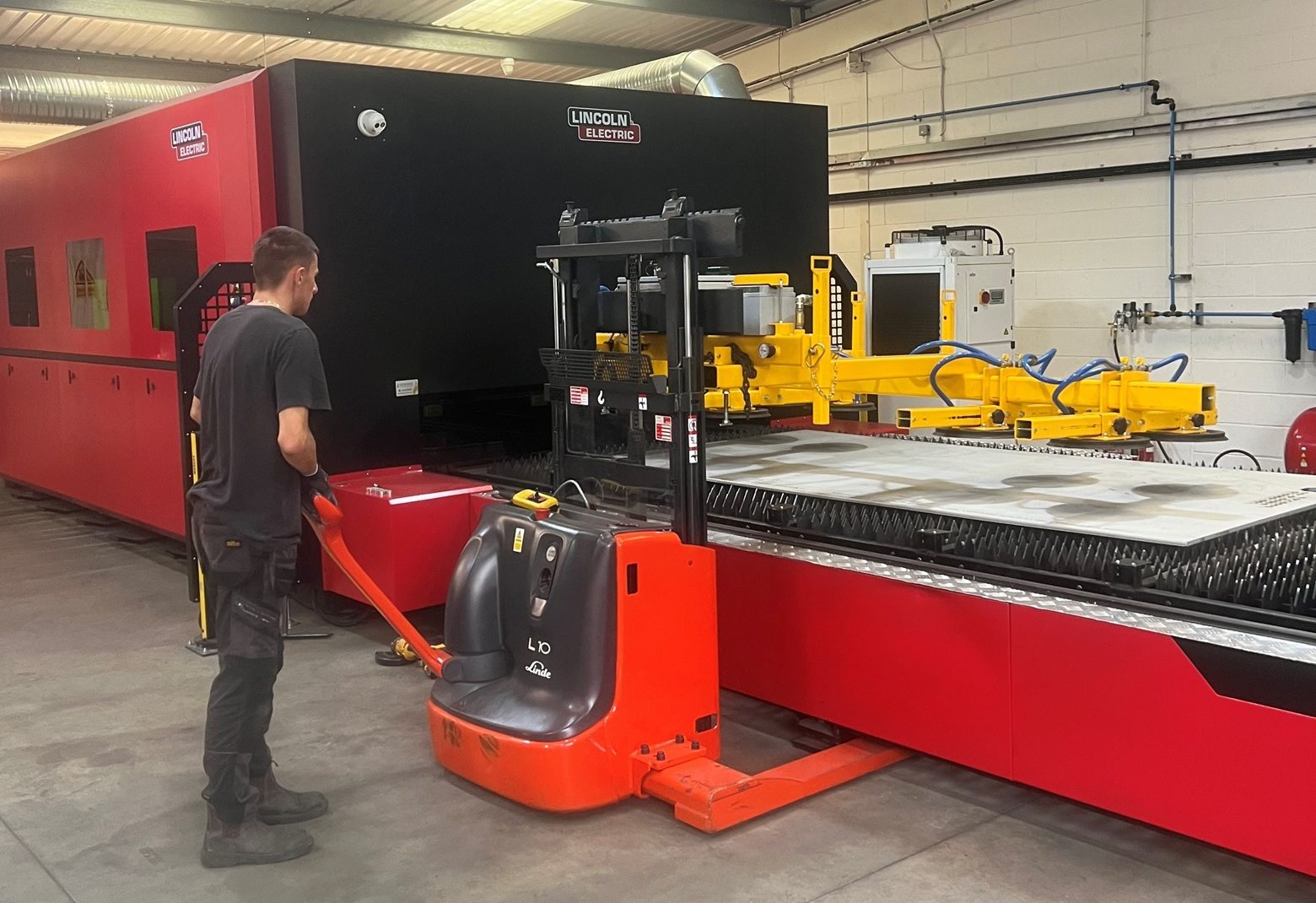
The shuttle table on the Linc-Cut 2040A represents a critical productivity feature.
“While it’s cutting, we can unload parts from the shuttle table and load the next sheet,” says Thomas. “It allows continuous operation and maximises our productivity.”
He specified Lantek nesting software for offline programming, recommended by Kerf.
“Lantek software works harmoniously with the Linc-Cut 2040A for all our cutting parameters.”
The Lantek software suite includes comprehensive technology tables with cutting parameters for various materials, thicknesses, speeds, feeds and acceleration rates. The machine also includes Lincoln Electric’s proprietary software, improving productivity, set-up times, programming times and simplifying the learning process.
The machine’s workload has exceeded expectations.
“It runs all day, but on one recent project involving 276 sheets of 3 mm stainless steel, we were cutting day and night – running 24 hours a day until project completion. That reliability and uptime are another reason we selected Lincoln and Kerf.”
Thomas adds: “We do production runs as well as small quantities. On one recent job, we had to cut 2,000 parts measuring 600 by 700 mm. As well as cutting stainless and mild steel, we’ll occasionally do aluminium work. The machine is always cutting and we always have one man running it. When customer production lines are down, the hourly cost can be significant. One food plant recently reported that downtime for a production line creates losses of £7,000 per hour, so having the Lincoln machine to support our customers in getting production up and running urgently is imperative. And the fast turnaround service from Kerf is hugely appreciated.”
The future
The laser installation represents only the beginning of Burton’s Engineering Services investment programme.
“We’ve just purchased a CNC press brake as it goes hand in hand with fiber laser cutting,” says Thomas explaining the logic of integrated cutting and bending capability.
A current opportunity involves manufacturing auxiliary chains for a waste processing customer. The components are currently sourced from the US at approximately £250,000 per unit with three-month lead times.
“Having the capability to produce this locally will reduce lead-times and costs for the customer whilst enhancing quality and enabling the end user to have a complete service from a single source.”
The growth trajectory
Thomas is frank about the financial commitment.
“We’ve ploughed seven figures into this now,” he acknowledges, referring to the new premises on Euro Park specifically chosen to accommodate the laser system and additional equipment investments.
The business case is already being validated, as Paul from Kerf adds: “The business has a real entrepreneurial spirit. Thomas realised the gap in the market was there, and he’s already picking up major contracts.”
When asked about satisfaction with the installation, the response from Thomas is unequivocal: “We’re delighted. It’s an excellent machine. We’re likely to buy another laser when the existing machine gets too busy.”
Would the next machine be another Lincoln?
“Most definitely,” he responds.
Want to know more about this article?
Ask us below...